
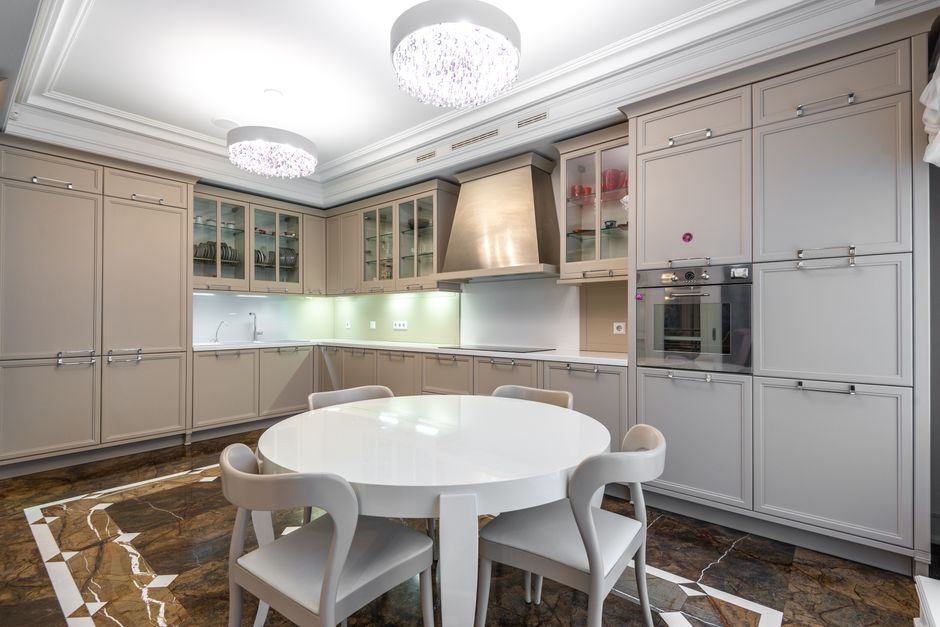
You open your cabinet door and a can of beans falls on your toe. Again. The potato bag is buried behind three bags of rice you forgot you owned. Your kitchen is small — maybe 8 feet of counter, four upper cabinets, and a narrow broom closet that’s supposed to be a pantry.
You don’t need a full kitchen remodel. You need a system that fits the space you have. After measuring, installing, and stress-testing five different pantry organization approaches in a 90-square-foot galley kitchen, here’s what actually works and what’s a waste of money.
What Makes a Pantry System Work in a Small Kitchen?
The fundamental problem with small kitchen pantries is depth and height. Standard cabinets are 24 inches deep but only 12 inches wide. You reach for the back and everything in front falls. The solution isn’t more shelves — it’s better access to the shelves you already have.
Three factors determine whether a system solves your problem or makes it worse:
- Vertical utilization — Most small pantries waste the top 12 inches because things get stacked and forgotten. Systems that use vertical space with tiered racks or pull-down mechanisms recover 30-40% of usable storage.
- Pull-out access — Fixed shelves force you to dig. A slide-out shelf or bin turns a 24-inch-deep cave into a visible, reachable row of items. The ROI on pull-out is higher than any other upgrade.
- Modularity — A system that can’t adjust to changing food shapes (bags of flour vs. jars of pasta) will frustrate you in three months. Adjustable dividers, expandable racks, and stackable bins win long-term.
Don’t buy anything until you measure your cabinet interior width, depth, and height. Most systems assume standard 14-16 inch wide cabinets. If yours is 12 inches or 18 inches, many “universal” products won’t fit.
System #1: The Heavy-Duty Pull-Out Shelf (Best for Deep Cabinets)

If you have a standard 24-inch-deep base cabinet, a full-extension pull-out shelf is the single highest-return upgrade. Rev-A-Shelf’s 5WB-1836-11C ($85-110 depending on finish) is the most reliable option. It’s a 36-inch-wide, two-tier pull-out with a 100-pound weight capacity. Installation takes about 45 minutes with a drill and a level.
What you get: full access to every item without bending or digging. The bottom tier holds canned goods and heavy jars. The top tier (adjustable height) holds spices, oils, and smaller items. The ball-bearing slides are rated for 30,000 cycles — that’s about 20 years of daily use.
Tradeoff: You lose about 2 inches of interior width for the slide mechanism. If your cabinet is exactly 14 inches wide, this won’t fit. For cabinets 15 inches and wider, it’s the best option.
When NOT to buy this: If your cabinet floor is uneven or warped, the slides will bind. Check with a level first. Also, this system is overkill for a cabinet under 18 inches wide — a simpler bin system works better.
System #2: The Tiered Can Rack (Best for Narrow Shelves)
For upper cabinets or narrow 12-inch shelves, tiered can racks solve the “stack and collapse” problem. OXO Good Grips 3-Tier Can Rack ($19.99) is the most tested option. It holds 12 standard cans across three levels, with a slight backward tilt so cans roll forward as you remove the front one.
Specs: 11.5 inches wide, 9.25 inches deep, 12.5 inches tall. Fits most standard cabinet shelves. The steel wire construction holds up to 25 pounds. No installation required — just place it on the shelf.
What the reviews don’t tell you: The tilt angle is steep enough that small cans (tuna, tomato paste) sometimes get stuck behind larger ones. You’ll need to manually nudge them. For standard 14.5-ounce cans, it works perfectly.
Better alternative for deep shelves: The Simplehuman 2-Tier Expandable Cabinet Organizer ($39.99) adjusts from 14 to 24 inches wide and sits on your existing shelf. It’s not as sturdy as the OXO for heavy cans, but it handles jars and bottles better.
System #3: The Over-the-Door Rack (Best for Zero Counter Space)
When every inch of counter and cabinet is full, the back of a door is free real estate. Rubbermaid’s Customizable Pantry Door Rack ($29.97 at Home Depot) holds up to 48 cans across four adjustable shelves. It mounts with four screws into the door frame (not the door itself — important for weight distribution).
Key spec: The shelves are 5 inches deep and 18 inches wide. That’s enough for standard cans, spice jars, and small condiment bottles. The wire construction is coated to prevent scratching. Weight capacity is 35 pounds total.
Failure mode to avoid: If your door is hollow-core (common in apartments), the screws won’t hold. You need a solid wood door or a metal frame. For renters, use heavy-duty adhesive strips rated for 30+ pounds — 3M Command strips work, but test with lower weight first.
Verdict: This is the cheapest way to add 3-4 square feet of storage. But it only works if your door opens fully without hitting a wall or appliance. Measure the clearance before buying.
System #4: The Stackable Bin System (Best for Open Shelving)
Open shelving looks clean but turns into a mess fast. IKEA KUGGIS 8-Bin Set ($24.99 for the set of 8) is the most modular option. Each bin is 8x11x5 inches, fits on a standard 12-inch shelf, and stacks with interlocking tabs. You can arrange them in rows, columns, or a grid.
Why this works: Each bin becomes a category — one for snacks, one for baking supplies, one for grains. When you need flour, you pull the whole bin down instead of digging through a pile. The bins are translucent enough to see contents without opening.
Numbers: Each bin holds about 3 pounds of dry goods or 6 standard cans. The set covers roughly 4 square feet of shelf space. Total cost per shelf: $24.99 for 8 bins, or about $3 per category.
Tradeoff: The bins are lightweight plastic. If you overfill them, the interlocking tabs can snap. Maximum safe weight per bin is 5 pounds. Also, they don’t work well for tall items like oil bottles or cereal boxes — those need a different system.
| System | Best For | Price Range | Install Time | Weight Capacity | Space Gained (est.) |
|---|---|---|---|---|---|
| Rev-A-Shelf pull-out | Deep base cabinets (15″+ wide) | $85-$110 | 45 min | 100 lbs | 40% more usable space |
| OXO can rack | Narrow shelves (12″ wide) | $19.99 | 0 min | 25 lbs | 30% better vertical use |
| Rubbermaid door rack | Zero counter space | $29.97 | 15 min | 35 lbs | 3-4 sq ft of storage |
| IKEA KUGGIS bins | Open shelving | $24.99 (set of 8) | 0 min | 5 lbs per bin | Better organization, same space |
| Simplehuman expandable | Deep shelves (14-24″ wide) | $39.99 | 0 min | 20 lbs | 25% better access |
System #5: The Lazy Susan Corner Unit (Best for Corner Cabinets)

Corner cabinets are the black hole of small kitchens. Stuff goes in and never comes out. A Lazy Susan turns that dead space into usable storage. Rev-A-Shelf’s 2-Tier 24-Inch Lazy Susan ($89) is the standard for a reason. It fits a 24-inch corner base cabinet and holds up to 75 pounds across two 12-inch-diameter tiers.
The mechanism uses a full-rotation bearing system — you spin it, it doesn’t wobble. The tiers are adjustable in height, so you can fit tall oil bottles on the bottom and spice jars on top. Installation requires cutting a hole in the cabinet shelf (if it has one) or mounting directly to the cabinet floor.
Critical warning: Measure the diagonal opening of your corner cabinet. Many corner cabinets have a 14-inch opening but a 24-inch interior. The Lazy Susan must fit through the opening. If your opening is smaller than 12 inches, this won’t work. IKEA’s SNUDDA Lazy Susan ($14.99) is a cheaper alternative for smaller openings — it’s 11 inches in diameter and sits on an existing shelf.
When NOT to buy: If your corner cabinet has a fixed center post or plumbing pipes running through it, skip this. A pull-out drawer system for the adjacent cabinet is a better use of money.
Common Mistakes That Waste Money and Space
After watching friends and clients make the same errors, here are the three biggest failures:
Buying before measuring. The number one reason returns happen. Measure width, depth, height, and the door opening. Write it down. Check it against the product specs. If the product says “fits 14-16 inch cabinets” and yours is 13.5 inches, it won’t fit.
Over-buying organizers. A kitchen with 12 different containers, racks, and bins is harder to maintain than a kitchen with 3 good ones. Start with one system for your biggest pain point. Live with it for two weeks. Then add the next.
Ignoring the door swing. An over-the-door rack is useless if the door hits the fridge. A pull-out shelf is useless if it can’t fully extend because the cabinet is blocked by a countertop overhang. Test the clearance before you drill.
One more thing: don’t buy magnetic spice racks for the fridge door. The magnets aren’t strong enough for glass jars. They fall. They break. I’ve seen it happen three times. Use a tiered rack inside the cabinet instead.
Which System Should You Buy First?
If you only buy one thing, make it the Rev-A-Shelf pull-out for your deepest base cabinet. It transforms the worst part of your kitchen — the dark, deep cabinet where things go to die — into the most functional space. The $85-110 cost is less than a single grocery run and the benefit lasts for years.
If your budget is under $50, get the OXO can rack for your upper shelf and the Rubbermaid door rack for your pantry door. That combination covers your most-used items (canned goods) and adds emergency overflow space, all for under $50 total.
For renters who can’t drill into cabinets, the IKEA KUGGIS bins are the safest bet. No installation, no holes, no deposit lost. Just group your food by category and pull a bin when you need it.
The systems here work because they fix the fundamental problem: visibility and access. When you can see everything you own and reach it without climbing over a bag of potatoes, you stop buying duplicates and stop wasting food. That’s the real return on investment.