If you’re planning a bathroom makeover in 2026, you’ve probably seen two brands everywhere: Lifeproof and TrafficMaster. Both sell peel-and-stick vinyl tile (LVT) that claims to handle moisture. But one of them fails faster in real bathrooms. Here’s the short version: Lifeproof Sterling Oak ($3.49/sq ft) beats TrafficMaster for bathrooms because its thicker wear layer and stronger adhesive resist peeling at edges — the #1 failure point in wet rooms. TrafficMaster works for low-moisture half-baths. That’s the bottom line. Now let’s unpack why.
How Peel-and-Stick Flooring Works in a Bathroom
Peel-and-stick flooring is a floating or glue-down vinyl product. The bottom has a pressure-sensitive adhesive. You peel the backing, press it onto a clean subfloor. That’s it. No grout, no glue trowels, no waiting 24 hours.
The problem bathrooms create: standing water, humidity cycles, and temperature swings from hot showers. These conditions test the adhesive bond. Cheap peel-and-stick tiles lift at corners within 6 months. Better ones hold for years.
Two specs matter most for bathrooms:
- Wear layer thickness — measured in mils (1 mil = 0.001 inch). Thicker = more waterproof protection. Bathroom minimum: 12 mil. Lifeproof uses 20 mil. TrafficMaster uses 6 to 12 mil depending on the line.
- Adhesive type — acrylic-based adhesives handle moisture better than rubber-based ones. Lifeproof uses a modified acrylic. TrafficMaster uses a standard acrylic that softens in heat.
Both are sold at Home Depot. That’s where the similarity ends.
Lifeproof vs. TrafficMaster: Side-by-Side Specs
Here’s the data you need to compare. All prices are per square foot as of early 2026.
| Specification | Lifeproof (Sterling Oak) | TrafficMaster (Auburn Oak) |
|---|---|---|
| Price per sq ft | $3.49 | $2.29 |
| Wear layer thickness | 20 mil | 6 mil |
| Total tile thickness | 5.5 mm | 2.0 mm |
| Waterproof rating | 100% waterproof (no swelling) | Water-resistant (edges swell if soaked) |
| Adhesive type | Modified acrylic (high-tack) | Standard acrylic |
| Warranty | Lifetime residential | 10-year limited |
| Installation temperature range | 55°F – 100°F | 65°F – 85°F |
Lifeproof costs 52% more per square foot. For a typical 40 sq ft bathroom, that’s $48 extra. The question: is that $48 worth it? For a full bathroom with a shower or tub, yes. For a powder room with just a toilet and sink, maybe not.
When TrafficMaster Makes Sense (And When It Doesn’t)
TrafficMaster peel-and-stick is the budget option. At $2.29/sq ft, it’s hard to beat for a weekend project. But you need to be honest about your bathroom’s moisture level.
Use TrafficMaster if:
- Your bathroom has no shower or tub — just a toilet and sink.
- You’re renting and need something cheap that lasts 2-3 years.
- The subfloor is perfectly flat and clean (no old adhesive residue).
- You can keep the room temperature stable at 70-75°F during installation.
Do NOT use TrafficMaster if:
- Water pools on the floor after showers. The 6 mil wear layer won’t protect the core.
- Your subfloor has dips or bumps. TrafficMaster tiles are thin (2mm) and telegraph every imperfection.
- You want the floor to last more than 5 years in a wet bathroom.
The most common failure with TrafficMaster in bathrooms: tiles lift at the seams within 8-12 months. The adhesive softens from steam, and the thin tile edge curls up. Once water gets under one tile, the whole floor can delaminate.
Lifeproof: The Bathroom-Safe Choice, But Not Perfect
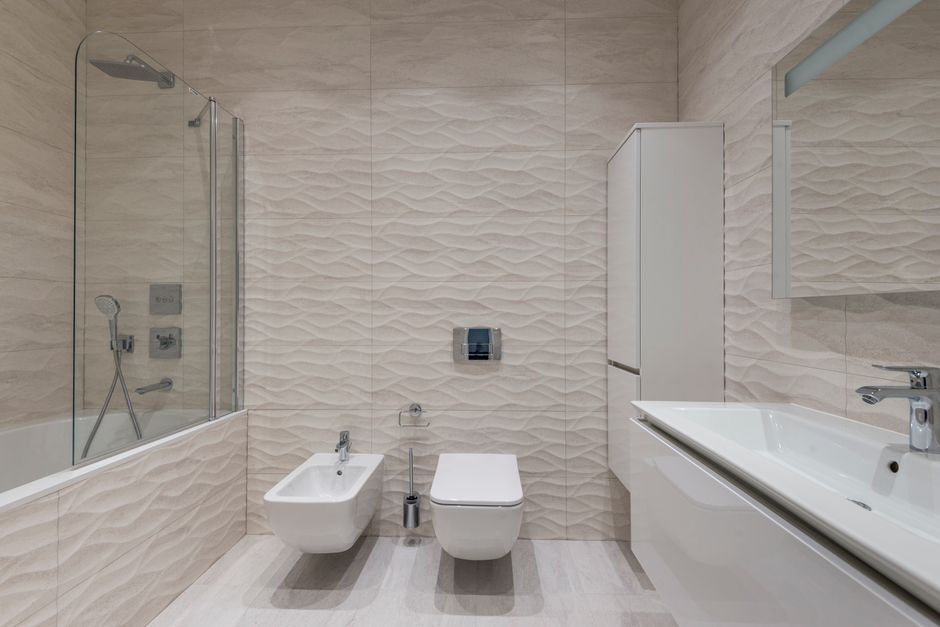
Lifeproof’s peel-and-stick line was designed specifically for high-moisture rooms. The 20 mil wear layer is thick enough that water beads on the surface rather than soaking in. The modified acrylic adhesive holds even when the room hits 90% humidity after a shower.
That said, Lifeproof has its own failure modes:
- Subfloor prep is still critical. Lifeproof won’t stick to dirty, greasy, or uneven floors. You must clean with TSP, patch holes, and sand bumps. Skip this, and the tiles won’t bond.
- Temperature matters. If you install Lifeproof below 55°F, the adhesive won’t set. In a cold basement bathroom, you’ll need a space heater running for 24 hours before and after install.
- No forgiving of expansion gaps. Lifeproof tiles expand slightly with heat. You need a 1/4-inch gap at walls. If you butt them tight, the floor buckles in summer.
Is Lifeproof worth the premium? For a bathroom that gets used daily by a family of four, yes. For a guest bathroom used twice a week, you could save the money and go with TrafficMaster — but you’ll replace it sooner.
Installation Mistakes That Kill Both Brands
Most peel-and-stick failures aren’t the product’s fault. They’re installation errors. Here are the three that destroy bathroom floors fastest.
- Installing over old vinyl. The new tile won’t bond to the old tile’s surface. The old floor’s pattern also shows through thin TrafficMaster tiles. Remove old flooring down to the subfloor. Period.
- Not using a roller. Hand-pressing tiles leaves air pockets. You need a 75-pound flooring roller (rent one for $25/day) to press every tile firmly. Without it, edges lift within weeks.
- Sealing edges with caulk. Some DIYers caulk the perimeter of a peel-and-stick floor, thinking it seals water out. It does the opposite — it traps moisture under the tiles, causing adhesive failure. Leave the edges free. Water needs a path to evaporate.
One more: don’t install peel-and-stick over heated floors. The heat softens the adhesive. Within 6 months, tiles shift and gaps appear. If you have radiant floor heating, use a glue-down LVT with a heat-stable adhesive instead.
Alternatives When Peel-and-Stick Won’t Work
Sometimes peel-and-stick is the wrong tool. Here’s when to look elsewhere.
If your bathroom floods regularly (leaky toilet, kids who splash), peel-and-stick isn’t enough. Standing water will eventually work through even a 20 mil wear layer. You need a click-lock LVT with a waterproof core (like LifeProof’s click line or NuCore). These have tongue-and-groove joints that seal water out better than adhesive alone.
If your subfloor is concrete and has moisture vapor issues, peel-and-stick won’t bond. The moisture pushes up through the concrete and breaks the adhesive bond. You need a vapor barrier and a floating floor system.
If you want the floor to last 15+ years in a high-use bathroom, consider sheet vinyl (like Armstrong Luxe Plank) or porcelain tile. Sheet vinyl has no seams for water to penetrate. Porcelain tile with proper grout sealing is the most durable option, but it costs more and requires professional installation.
For most DIY bathroom makeovers, peel-and-stick is a solid choice — but only if you pick the right product and install it correctly.
Final Verdict: Which One to Buy in 2026
Here’s the compressed verdict:
For a full bathroom with a shower or tub: Buy Lifeproof Sterling Oak ($3.49/sq ft). The 20 mil wear layer and high-tack adhesive give you the best chance of a floor that lasts 8-10 years without peeling. Budget an extra $50 for a flooring roller and TSP cleaner. Skip the cheap option here — the $48 you save won’t cover the frustration of replacing tiles in year two.
For a half-bath or powder room with no shower: TrafficMaster Auburn Oak ($2.29/sq ft) works fine. The moisture risk is low. You can finish a 20 sq ft floor for under $50. Just know you’ll probably replace it in 3-5 years when the edges start lifting. That’s the tradeoff for the price.
For any bathroom with kids or renters: Spend the extra on Lifeproof. The thicker wear layer resists scratches from dropped bottles and toy cars. The lifetime warranty also covers manufacturing defects, which the TrafficMaster 10-year limited warranty doesn’t fully cover.
Peel-and-stick flooring keeps improving. The 2026 versions of Lifeproof have better UV resistance than 2026 models — colors won’t fade as fast near windows. TrafficMaster hasn’t updated its formula in three years. If Home Depot releases a new TrafficMaster line with a thicker wear layer, that could change the math. For now, Lifeproof is the bathroom-safe pick.