A tidy pantry is not built from matching containers alone. It works because every item has a clear home, the shelves match the way you cook, and putting things away takes less than a minute. These five kitchen pantry organization ideas focus on systems that hold up after the first grocery trip.
Why Pantry Systems Fail After One Week
Most pantry makeovers fail for a simple reason: they organize the appearance instead of the daily movement of food. A beautiful row of jars can still create clutter if cereal, snacks, baking supplies, and cans all share the same shelf. The right system reduces decisions. You should be able to see what you own, reach it without moving five other items, and return it to the same spot.
Store food by the job it performs
Group ingredients by use rather than package shape. Keep breakfast foods together, place weeknight cooking ingredients near one another, and create a separate baking zone. Snacks deserve their own section if children reach for them. This approach works better than lining up every box by height because it matches the way people search for food.
Leave a landing zone
Reserve one shelf or basket for items that need to be used soon. Partly opened pasta, an almost-empty bag of rice, and ingredients bought for one recipe can sit there. Without this landing zone, unfinished food gets pushed behind newer groceries and expires unnoticed. Keep the shelf at eye level and review it once a week.
Clear visibility beats perfect styling. If a container hides its contents or a shelf requires repeated lifting, the system is too demanding for everyday use.
Declutter the Pantry Before Buying Organizers
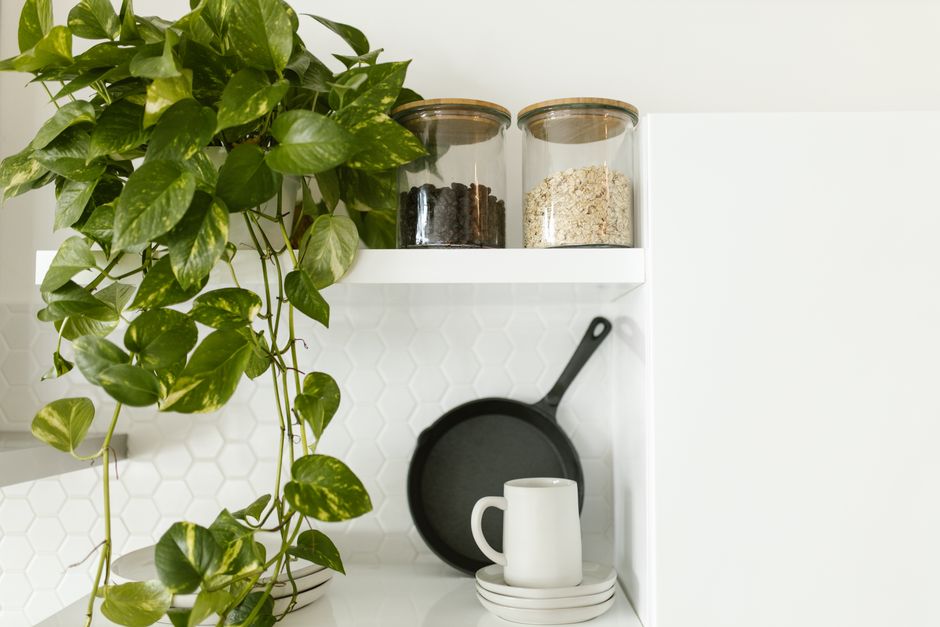
The most useful pantry organizer is often empty shelf space. Before measuring for bins, remove every item and check dates, duplicates, damaged packaging, and ingredients nobody eats. This step prevents a common mistake: buying storage for food that should have left the kitchen.
The 15-minute edit
- Take everything out of one shelf at a time. Working shelf by shelf keeps the task manageable.
- Make four groups: keep, use soon, donate, and discard. Do not create a large “decide later” pile.
- Combine unopened duplicates only when the labels and dates are easy to track.
- Wipe the shelf with a lightly damp cloth and let it dry before returning food.
- Measure the usable width, depth, and height. Include hinges, pipes, shelf lips, and door frames.
The one-bin limit
Give each loose category a defined limit. For example, one snack basket can hold the amount your household eats in a week. When it is full, buy less or use what remains before adding more. This rule protects the pantry from turning into a backup warehouse.
Do not decant food just because it looks attractive. Keep original packaging when cooking instructions, allergy details, or expiration dates matter. A small label on the lid can help, but a missing label turns neat storage into a guessing game.
Choose Pantry Organizers by Shelf Job
Different shelves need different tools. Deep shelves need pull-forward storage, tall shelves need vertical separation, and narrow shelves need containers that use the full depth without wasting width. Buying one organizer style for the whole pantry usually creates dead space.
Quick comparison of useful formats
| Organizer | Known size | Best use | Main limitation |
|---|---|---|---|
| IKEA VARIERA shelf insert | 32 x 28 x 16 cm | Separating plates, cans, and short boxes | Not ideal for very deep shelves |
| iDesign Linus Lazy Susan | 11-inch round format | Oils, sauces, and small jars | Round shape leaves corner gaps |
| OXO Good Grips POP Container | Big Square, 4.4-quart | Flour, sugar, cereal, and dry staples | Costs more than basic tubs |
| Rubbermaid Brilliance Pantry Container | 16-cup size | Pasta, rice, and bulky dry goods | Needs a clear labeling habit |
Match the tool to the reach zone
Use open baskets below waist height because they are easy to pull out. Put everyday ingredients between shoulder and hip level. Store backup stock and occasional baking supplies higher up. A shelf riser earns its space when it creates a second visible row; a lazy Susan earns its space when it prevents items from disappearing at the back.
Measure before clicking buy
Measure the narrowest point, not the widest part of the shelf. Leave at least 2.5 cm of clearance around a pull-out bin or turntable. That gap gives your hand room to grip the organizer and keeps doors from catching. The best pantry setup uses fewer pieces that fit correctly.
Use Five Zones Instead of One Giant Pantry
My strongest recommendation is to divide the pantry into five working zones: breakfast, cooking, baking, snacks, and backstock. Zones make a small pantry feel larger because each shelf answers one question. You stop scanning every package when you need oats, pasta, or a quick snack.
Zone 1: breakfast and daily staples
Place coffee, tea, cereal, oats, and spreads at eye level. Keep open packets inside one shallow bin so the shelf does not collect small bags. If several people use the pantry, place the most frequently used items at the front and keep refills behind them.
Zone 2: cooking ingredients
Group pasta, rice, canned tomatoes, stock, sauces, and spices near the main preparation area. A square container such as the OXO Good Grips POP Container Big Square 4.4-quart suits flour or rice because the lid opens with one press and the flat sides stack neatly. For cans, use a stepped riser rather than a deep basket.
Zones 3 to 5: baking, snacks, and backstock
Keep baking ingredients together so flour and sugar do not spread into the everyday cooking zone. Use a low basket for snacks and set a clear refill limit. Backstock belongs on the highest or least convenient shelf. It should hold unopened extras, not items you reach for every day. A weekly five-minute reset is enough to return misplaced food to its zone.
Choose Containers That Solve a Real Problem
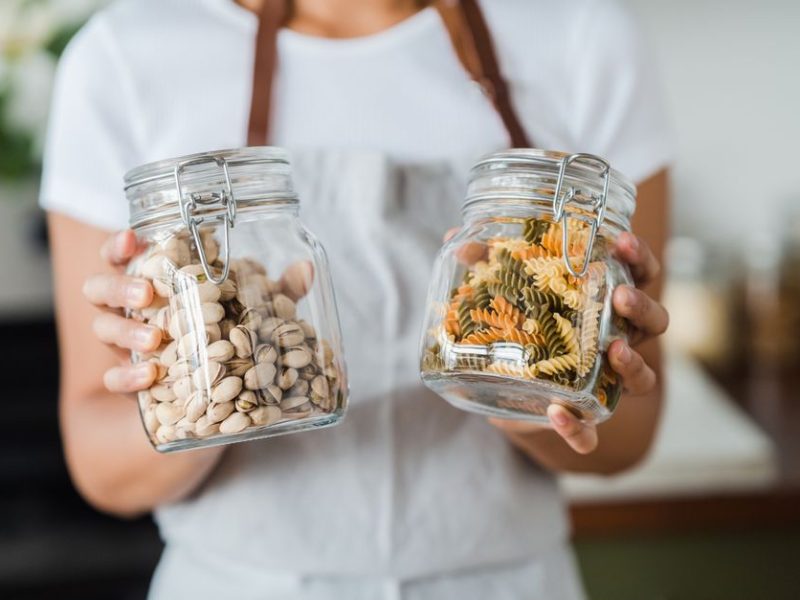
Do not buy a matching container set first. Buy containers only for foods that create a specific problem: torn bags, stale cereal, spilled grains, or awkward half-full boxes. The container must fit the shelf and the food quantity. Otherwise, it adds washing, labeling, and transfer work without making the pantry easier.
Best for dry staples: OXO POP
The OXO Good Grips POP Container is the best choice for households that regularly use flour, sugar, oats, or rice. The Big Square 4.4-quart size holds a useful amount without becoming too heavy to lift. Its clear walls show the remaining food, while the press-button lid gives quick access. Use a removable label with the ingredient name and purchase date. Do not fill it with more than your household can use in several weeks.
Best value for larger quantities: Rubbermaid Brilliance
The 16-cup Rubbermaid Brilliance Pantry Container is a better pick for pasta, cereal, and other bulky goods when you want a lighter plastic format. The rectangular shape uses shelf depth efficiently, and the clear body makes duplicates easy to spot. It is not the right choice for every item. Keep original packets for foods with complex cooking directions, and avoid stacking containers so high that the bottom one becomes difficult to remove.
For small loose items, use one or two open bins instead of individual jars. The goal is fewer pieces to wash and fewer lids to match. A container system earns its place only when it makes the next meal easier.
Q&A: Fix the Pantry Problems That Keep Returning
What works best for a deep pantry shelf?
Use a pull-forward bin or a turntable. A deep shelf wastes space when small jars sit behind larger ones. The iDesign Linus Lazy Susan in the 11-inch format works well for oils, vinegars, sauces, and spreads because you can rotate the contents into view. It is a poor choice for rectangular boxes or heavy stacks. Use a handled bin for those instead.
How should a small pantry store cans?
Keep cans in one low section and use a stepped riser so labels face forward. Do not build a tall pile that requires lifting the front row. Sort by type, such as tomatoes, beans, soup, and vegetables. Put the oldest cans at the front and check dates during the weekly reset.
Are pantry door racks worth buying?
Only when the door has enough clearance and the rack stays shallow. A door rack is useful for spice packets, wraps, and small bottles. It is a bad purchase for heavy jars or tall boxes because the added weight can strain hinges and make the door swing open. Measure the gap between the door and shelves before buying, then reserve the rack for lightweight items.
These fixes work because they remove hidden storage, not because they add more capacity. More capacity often encourages overbuying.
Five Mistakes That Make a Tidy Pantry Messy
A tidy pantry needs limits. The best layout is the one your household can reset while putting groceries away, even on a busy evening.
Avoid these common setup errors
- Overfilling containers: Leave room to scoop or pour without spilling. A full container is harder to lift and harder to clean.
- Using opaque bins: If you cannot see the food, add a label with the exact contents. Otherwise, use clear storage.
- Ignoring expiration dates: Write the opening date on flour, nuts, and grains that may sit for months.
- Storing heavy items overhead: Keep large jars, bulk cans, and appliances below shoulder height.
- Creating too many categories: Five practical zones are easier to maintain than fifteen tiny labels.
The clear winner for most homes
For most kitchens, the best combination is one breakfast shelf, one cooking shelf with a riser, one low snack basket, a small turntable for sauces, and a limited number of airtight containers for dry staples. Choose IKEA VARIERA when you need inexpensive shelf separation, OXO for premium dry-food storage, and Rubbermaid Brilliance for larger rectangular containers. Skip door racks unless the measurements prove they fit.
Start with decluttering, then create five zones, and buy only the organizers that solve a measured problem. That sequence gives you the most reliable kitchen pantry organization system for 2026: visible food, short resets, and no wasted shelf space.