Walk-in closets are a premium feature in many homes, but the storage system you choose determines whether that space works or wastes square footage. Two brands dominate the DIY custom closet market: Elfa (sold at The Container Store) and ClosetMaid (available at Home Depot, Lowe’s, and online). This breakdown compares load limits, materials, cost per linear foot, and real-world installation tradeoffs. It is not legal advice — consult a licensed contractor if structural modifications are involved.
How Elfa and ClosetMaid Differ at the Structural Level
Both systems are modular, but their engineering philosophies diverge sharply. Elfa uses a singular vertical track system (a single aluminum channel bolted into studs) with cantilevered brackets that support shelves, rods, and drawers. ClosetMaid uses a horizontal rail system (two or three metal bars screwed into studs) with brackets that clip or slide onto the rails.
Elfa’s Cantilevered Track System
Elfa’s vertical track is 1 inch wide and mounts directly to drywall anchors or studs. Brackets lock into the track at 1-inch increments. This design means:
- Load limit per bracket: 150 lbs (tested by the manufacturer for static load)
- Adjustability: Shelf height changes without removing the track
- Wall clearance: Brackets extend 12–16 inches from the wall, so deep items (shoes in boxes, large handbags) fit without hitting the back wall
ClosetMaid’s Horizontal Rail System
ClosetMaid’s ShelfTrack system uses 4-foot or 8-foot rails. Brackets snap into the rail at 2-inch intervals. Key specs:
- Load limit per shelf: 50–75 lbs (varies by shelf material — wire holds less than laminate)
- Rail spacing: Requires two rails per shelf for stability; three rails for heavy loads
- Depth limitation: Standard shelves are 12 or 16 inches deep; deeper options exist but cost 30–50% more
Verdict: For walk-ins where you store heavy items (bulky coats, luggage, stacked sweaters), Elfa’s 150-lb bracket capacity is safer. ClosetMaid works for lighter clothing and accessories.
| Feature | Elfa (The Container Store) | ClosetMaid (Home Depot/Lowe’s) |
|---|---|---|
| Mounting system | Single vertical aluminum track | Horizontal steel rails (2–3 per shelf) |
| Max load per bracket/shelf | 150 lbs | 75 lbs (wire), 50 lbs (laminate) |
| Height adjustability increment | 1 inch | 2 inches |
| Standard shelf depth | 12–16 inches | 12 or 16 inches |
| Drawer integration | Full-extension, soft-close available | Basic wire baskets or laminate drawers |
| Warranty | Limited lifetime | 10 years (limited) |
Cost Per Linear Foot: The Real Price of Customization
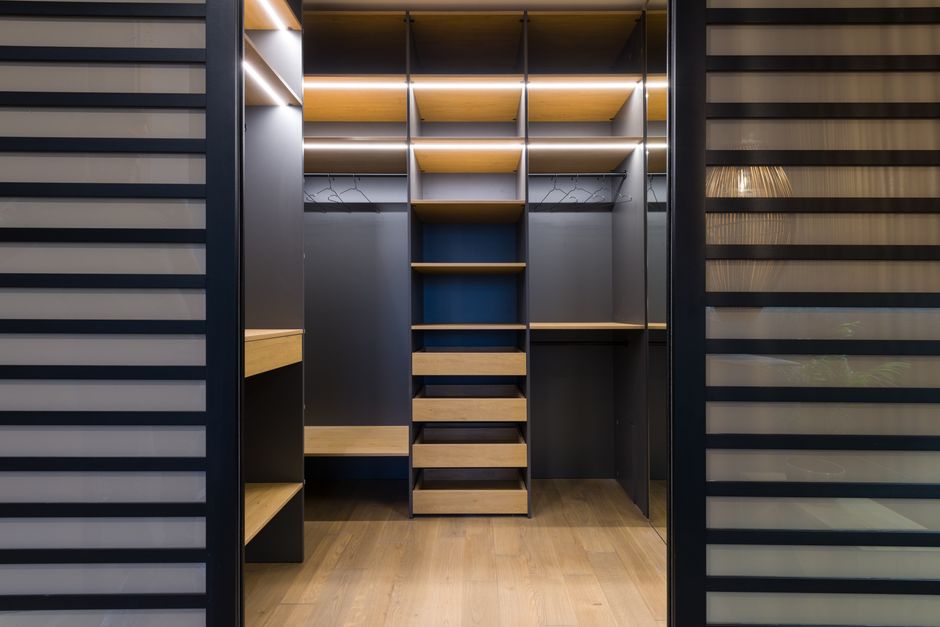
Pricing varies by configuration, but for a standard 8-foot-wide walk-in with two hanging rods, two shelves, and one drawer bank, here are real costs as of early 2026:
- Elfa: $1,200–$1,800 for the system (track, brackets, shelves, rods, one drawer unit). Installation by The Container Store adds $300–$500.
- ClosetMaid: $400–$700 for the same configuration (rails, wire shelves, rods, one laminate drawer unit). DIY installation is straightforward.
What drives the price difference: Elfa uses aluminum extrusions (more expensive to manufacture) and includes soft-close drawer slides as standard. ClosetMaid uses powder-coated steel wire or particleboard laminate. The Elfa system also requires a single continuous track per column, which adds material cost for tall walk-ins.
Verdict: If budget is the primary constraint, ClosetMaid delivers acceptable function at half the price. For a primary walk-in where you interact with the system daily, Elfa’s premium materials justify the higher cost over 10+ years.
Installation: Which System Can You Actually Do Yourself?
Both systems are marketed as DIY, but the skill requirements differ significantly.
ClosetMaid: Beginner-Friendly but Requires Precision
ClosetMaid’s horizontal rails must be perfectly level and spaced. A 1/8-inch error at the first rail propagates across the entire wall. The rails themselves are heavy (4-foot steel rail weighs about 3 lbs). You need a stud finder, a level, a drill, and a helper to hold rails while marking screw holes. Most homeowners can finish a 6-foot-wide walk-in in 4–6 hours.
Elfa: Requires a Stud Finder and Patience
Elfa’s vertical track must be plumb. A 1/16-inch deviation over 8 feet will cause brackets to bind. The track is lightweight (aluminum, 1 lb per 4 feet), but cutting it requires a hacksaw or fine-tooth saw. The Container Store offers free design consultation and paid installation. DIY time: 6–8 hours for a medium walk-in.
Common mistake: Mounting Elfa tracks into drywall without hitting studs. The brackets are designed for stud mounting. Using only drywall anchors with heavy loads (over 50 lbs) risks pullout. ClosetMaid rails also require studs for stability.
Verdict: ClosetMaid is easier for a first-time DIYer. Elfa is better if you have basic carpentry skills or pay for installation.
Material Quality and Longevity: What Breaks First

Over 5–10 years, the weak points in each system become apparent.
Elfa Weak Points
- Bracket clips: The plastic locking tab on the bracket can snap if over-torqued. Replacement brackets cost $8–$12 each.
- Drawer slides: Soft-close mechanism may wear after 20,000 cycles (roughly 5–7 years of daily use). Slides are replaceable.
ClosetMaid Weak Points
- Wire shelf coating: The PVC coating peels after 3–5 years in humid climates (bathrooms, basements). Exposed steel rusts.
- Laminate shelves: Particleboard edges swell if exposed to moisture. Not recommended for walk-ins near bathrooms.
- Rail clips: Plastic clips that hold shelves to rails break if overloaded. Replacement clips cost $2 each.
Verdict: Elfa’s aluminum and steel construction outlasts ClosetMaid’s wire and particleboard by a significant margin. If your walk-in is in a climate-controlled interior room, ClosetMaid’s lifespan is acceptable (8–12 years). For basements or garages converted to walk-ins, Elfa is the only choice.
When NOT to Buy Elfa (and When to Skip ClosetMaid)
These systems are not universal. Here are specific scenarios where each fails.
Skip Elfa If:
- You rent: The vertical track leaves visible screw holes in studs. Landlords typically require patching and painting.
- You need a system for a reach-in closet (under 4 feet wide): Elfa’s track system is overbuilt for small spaces. A single ClosetMaid rail setup costs $150 and works fine.
- You plan to move within 3 years: Elfa is not easily removable. The track is screwed into studs; removing it damages drywall.
Skip ClosetMaid If:
- You store heavy items: 75 lbs per shelf is not enough for stacked denim, books, or vinyl records. The rails will sag.
- You need full-extension drawers: ClosetMaid’s wire baskets are not full-extension. Items at the back are hard to reach.
- You live in a humid climate (Gulf Coast, Pacific Northwest): The laminate shelves and wire coating degrade faster.
Verdict: For a primary walk-in closet in a permanent home, Elfa is the better long-term investment. For a guest room or secondary closet, ClosetMaid is cost-effective.
Alternatives Worth Considering
If neither system fits your needs, three alternatives are worth researching:
- IKEA PAX: 22-inch-deep frames allow double hanging. Cost per linear foot: $150–$250. Requires assembly. Not adjustable after installation without disassembly.
- EasyClosets: Pre-cut, custom-sized laminate panels. Similar price to Elfa ($1,000–$1,500 for a medium walk-in). Better for irregular wall dimensions.
- Custom millwork: Built-in plywood cabinets with solid wood doors. Cost: $3,000–$8,000 for a walk-in. Best for historic homes or high-end renovations.
When to choose alternatives: If you need double hanging (Elfa and ClosetMaid max out at one rod per column), IKEA PAX is the only affordable option. If your walk-in has sloped ceilings or angled walls, EasyClosets or custom millwork are better.
Final Verdict: Which System Wins for Walk-Ins?
For a standard rectangular walk-in closet (8×6 feet or larger) where you plan to stay in the home for 5+ years, Elfa is the best choice. The 150-lb bracket capacity, aluminum construction, and full-extension drawers handle daily use without failure. The $1,200–$1,800 cost is an investment that adds resale value.
For a budget-conscious renovation, a guest room closet, or a temporary setup, ClosetMaid is adequate. Expect to replace wire shelves after 5 years in humid conditions. The $400–$700 price point leaves room for other upgrades.
The custom closet market is moving toward hybrid systems (aluminum tracks with laminate shelves, like the new ClosetMaid Fusion line). By 2027, the gap between these two brands may narrow. For now, the choice is clear: Elfa for durability, ClosetMaid for cost.