The best rental bathroom updates change what you see and touch every day: better light, coordinated textiles, useful storage, and a few polished details. You do not need to retile the room or replace the vanity. A smart $150 to $250 plan can make a dated bathroom feel cleaner, calmer, and more intentional while keeping your security deposit safe.
1. Build a $250 Plan Around the Biggest Eyesore
Spend first on what dominates the room
Stand in the doorway and identify the first thing your eye notices. It may be a yellow ceiling light, a crowded vanity, stained grout, mismatched towels, or a builder-grade mirror. Fix that feature before buying small accessories. Five attractive soap dispensers will not rescue a bathroom with harsh lighting and no place to hang a towel.
Use the budget in the right order
The strongest plan gives the largest share of the budget to the most visible change, then reserves money for practical fixes. Keep a small amount untouched for removable mounting strips, replacement bulbs, cleaning supplies, or a return when an item does not fit.
| Upgrade | Typical budget | Why it earns priority | Rental risk |
|---|---|---|---|
| Lighting improvement | $40–$85 | Changes the room at every hour of the day | Low if you use plug-in or rechargeable pieces |
| Textile reset | $35–$70 | Adds color, softness, and a coordinated finish | Very low |
| Storage and hooks | $20–$55 | Removes countertop clutter and wet towels | Low when mounted correctly |
| Decorative details | $15–$40 | Hides visual noise and adds personality | Low with freestanding decor |
| Total | $110–$250 | Enough for a visible room reset | Check the lease first |
Landlord approval matters before drilling, changing a faucet, painting, or replacing a light fixture. For most renters, lighting, textiles, storage, and movable decor deliver the best return with the least risk.
2. Improve Bathroom Lighting Without Touching the Wiring
Choose light for faces, not just the ceiling
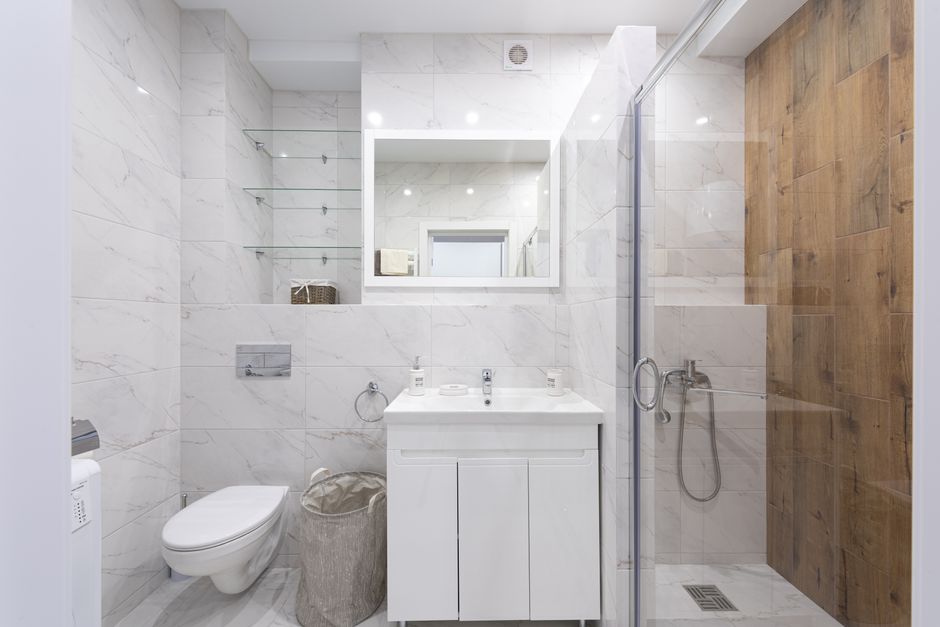
The fastest way to make a rental bathroom feel better is to correct the light. A single ceiling fixture casts shadows under the eyes and chin, which makes the mirror area look gloomy even when the room is technically bright. Aim for a light source near face level or on both sides of the mirror. A color temperature between 4000K and 5000K gives a clean, useful tone for shaving and makeup without the blue cast of very cool daylight bulbs. Choose bulbs with a high color-rendering index, ideally 90 or above, so skin tones and paint colors look closer to reality.
Brightness matters too. A small bathroom usually benefits from roughly 1,500 to 3,000 total lumens, spread across the ceiling and mirror area rather than concentrated in one glaring bulb. If your existing fixture uses standard bulbs, replacing them may be enough. Pick the same base and stay within the fixture’s wattage limit. A 9-watt LED can replace an old 60-watt incandescent bulb while using less power and producing less heat.
Use removable lighting with care
A rechargeable mirror bar can work well when the lease forbids electrical changes, but it needs a sensible location. Keep it away from direct shower spray, follow the damp-location rating, and charge it outside the wet zone. Clean and dry the mounting surface before applying adhesive. Test the light for three days before removing the original fixture or buying a second unit.
The common mistake is choosing a decorative light that looks attractive in a product photo but provides weak, uneven illumination. Put function first. The winning setup is a warm-to-neutral ceiling light plus a brighter mirror light, with both aimed to reduce shadows.
3. Let Textiles Do the Fastest Visual Work
Best verdict for a dated bathroom
The textile reset is the fastest low-cost transformation: use one calm color for the shower curtain, towels, and mat, then add one darker accent instead of collecting unrelated patterns, because coordinated fabric covers a large amount of visual space, softens hard rental surfaces, and costs far less than a permanent finish; the Threshold Performance Plus bath towel, listed around $9–$15, and its 20-by-30-inch bath mat, listed at $18, are strong budget choices because the sizes are practical, the cotton pieces are machine washable, and the price leaves room for two or three matching towels rather than one expensive statement piece.
Know when to skip the bath mat
Do not buy a thick memory-foam mat if the bathroom stays damp or the door barely clears the floor; choose a thin, washable cotton mat instead, wash it weekly, and hang it after showers, while a fabric shower curtain can add color only when it is paired with a washable liner and enough ventilation to prevent mildew, making textiles the best choice for renters who want a visible change without adhesive, tools, or landlord permission.
4. Add Storage That Leaves the Walls Intact
Build storage from the floor upward
The best rental storage strategy uses forgotten surfaces before it touches the wall. Keep the vanity top clear, move daily items into one tray, and give every towel a drying point. A small bathroom feels larger when fewer objects sit at eye level.
- Use the back of the bathroom door for a slim over-door rack, but measure the door gap first so the hooks do not stop it from closing.
- Choose a narrow freestanding shelf beside the vanity or toilet when the floor plan allows at least 24 inches of clear walking space.
- Use a lidded basket for spare toilet paper and a small open bin for items used every day.
- Mount only lightweight items with a system rated for the actual load, not the empty weight of the hook.
- For towels, the Command 4 lb. Large Double Bath Hook in Matte Black is listed at $10.98; use it for one dry towel or robe, not a stack of wet bath sheets.
- Use suction storage only on smooth, nonporous surfaces. It will not hold reliably on textured tile, grout lines, or dusty walls.
- Remove adhesive hooks by pulling the strip straight down as directed. Twisting or pulling outward can lift paint.
The biggest mistake is buying storage before measuring. Record the width of the vanity, the depth of the toilet area, the door clearance, and the distance from the shower spray. For a narrow bathroom, an over-door rack beats a deep floor cabinet because it adds capacity without stealing walking space.
5. Which Small Products Are Actually Worth Buying?
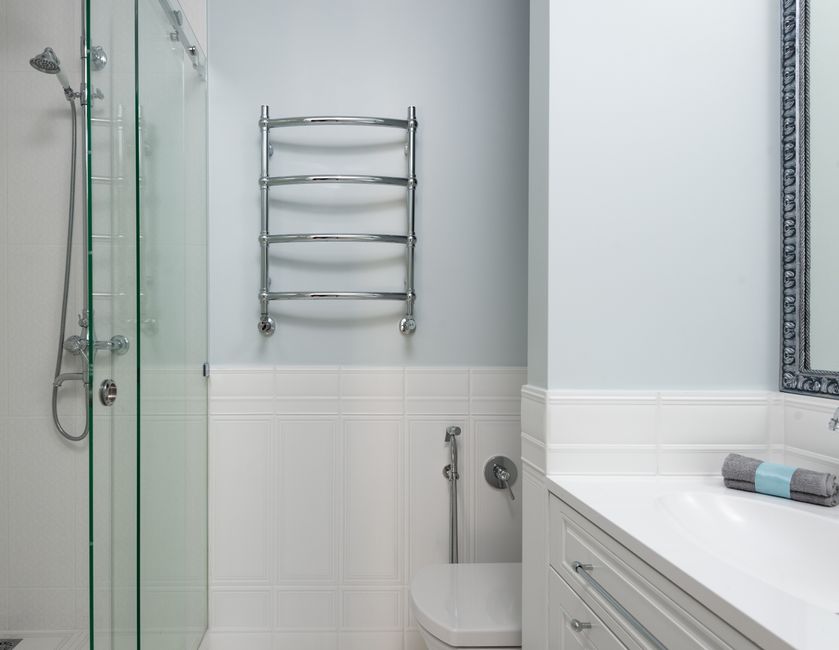
The best overall upgrade is a coordinated lighting-and-textile reset, not a costly plumbing project. Buy permanent-looking fixtures only after confirming the lease, the measurements, and the return policy.
Is a rechargeable vanity light worth it?
Yes, when the existing mirror light is poor and wiring is off-limits. The Latitude Run 16-inch brushed-gold cordless rechargeable vanity light is listed at $74.99 and includes an 8,000mAh battery, remote, timer, dimming, and horizontal or vertical installation. Those features make it useful for renters, but the light still needs safe placement away from direct water. Check the Wayfair listing before buying because prices and availability change.
Should you replace the faucet?
Only with written permission. The Moen Genta LX TV6708BN is a polished brushed-nickel, 8-inch widespread faucet listed at $159.73, so it can create a strong visual improvement, but it may not fit a single-hole vanity or the existing plumbing connections. The Home Depot listing shows the model details. For most renters, new hardware, a cleaner mirror, and matching towels are safer purchases than a faucet.
Which textile purchase comes first?
Buy two matching bath towels and one washable mat before decorative objects. The Threshold Performance Plus collection gives you a low-cost starting point, with towels listed around $9–$15 and a 20-by-30-inch mat at $18; the Target listing shows the current collection and sizes. For a rental bathroom in 2026, choose neutral textiles, one strong metal finish, and a removable light. That combination delivers the polished look without creating a repair bill when you move.