

Most appliance shoppers pick a brand they recognize and assume reliability comes with the price tag. It doesn’t. A $2,500 Samsung refrigerator fails at a higher rate than an $850 Whirlpool. A $1,200 KitchenAid dishwasher generates more service calls than a $700 Bosch. The price hierarchy and the reliability hierarchy are not the same list.
The short version: Bosch leads for dishwashers, LG and Whirlpool lead for refrigerators depending on design type, and KitchenAid outperforms on ranges and standalone mixers. Samsung consistently underperforms across categories despite its market dominance and premium pricing.
None of that is a complete answer, because reliability is not brand-wide — it’s category-specific. A company can build world-class dishwashers and mediocre refrigerators simultaneously. The rest of this article breaks it down appliance by appliance, with actual model numbers and estimates you can use before you spend anything.
Brand Reliability Compared: What the Numbers Actually Show
Consumer Reports surveys roughly 300,000 subscribers annually on appliance performance and repair frequency. J.D. Power tracks owner satisfaction and service call patterns. ServiceBench data tracks actual technician dispatch volume by brand. When those datasets align, the brand tier picture becomes clear.
The table below reflects aggregated 5-year repair frequency estimates across major kitchen appliance categories. Repair rate refers to the estimated percentage of owners who needed at least one paid repair within five years of purchase.
| Brand | Reliability Tier | Est. 5-Year Repair Rate | Strongest Category | Problem Category | Typical Price Range |
|---|---|---|---|---|---|
| Miele | Excellent | 8–10% | Dishwashers | None (consistent across board) | $1,200–$4,500+ |
| Bosch | Excellent | 10–13% | Dishwashers | Refrigerators (limited U.S. lineup) | $700–$2,500 |
| LG | Good | 14–17% | Refrigerators (post-2026) | Ranges | $600–$3,500 |
| Whirlpool | Good | 15–18% | Ranges, Top-Freezer Refrigerators | Dishwashers | $400–$2,000 |
| KitchenAid | Good | 14–18% | Stand Mixers, Gas Ranges | Budget Dishwashers | $800–$3,500 |
| GE / GE Cafe | Average | 18–22% | Basic Refrigerators | Dishwashers, Induction Ranges | $500–$3,000 |
| Samsung | Below Average | 22–27% | Over-the-Range Microwaves | French Door Refrigerators, Dishwashers | $700–$4,000 |
| Frigidaire | Average | 19–23% | Entry-Level Refrigerators | Dishwashers, Ranges | $350–$1,800 |
One important clarification: repair rate alone doesn’t tell the full story. Whirlpool’s service network is enormous — parts are cheap and widely available at local supply houses and on Amazon within two days. A Whirlpool dishwasher repair that runs $150 at year five is a very different situation than a Samsung refrigerator repair that costs $700 for a proprietary part with a four-week technician wait. Total cost of ownership over a decade matters more than sticker price.
Why the Appliance Type Completely Changes the Reliability Rankings
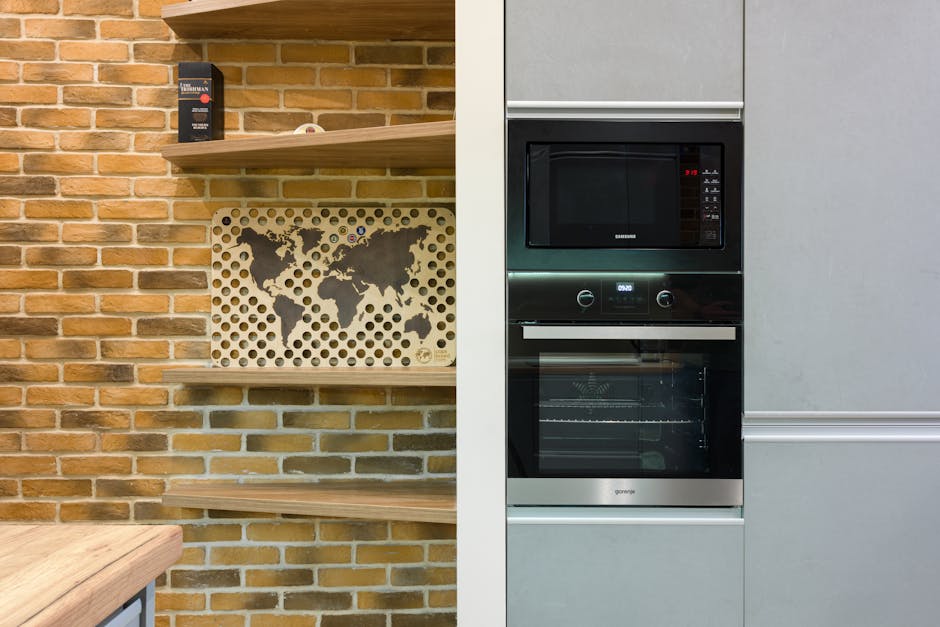
Buying Bosch because their dishwashers are excellent and assuming their refrigerators will be equally dependable is a logical error. The engineering teams, component suppliers, and mechanical complexity are different across product lines. This distinction costs people real money every year.
Refrigerators: French Door Designs Carry a Hidden Failure Rate
French door refrigerators are the dominant style in new kitchens and the style with the highest failure rate. The ice maker in most French door models sits inside the freezer door compartment — a humid, thermally stressed position that causes ice maker failures at roughly twice the rate of designs where the ice maker is housed in a more stable location. Every model that puts the ice maker inside the door is accepting that trade-off.
Samsung’s French door refrigerators are a well-documented problem. The company faced class action litigation over widespread ice maker failures in units produced from 2014 through 2026. Field technicians consistently flag models like the Samsung RF28R7351SR (28 cu. ft., approximately $2,200) as high-frequency service calls. The proprietary components often take weeks to source, and repair bills regularly approach $600–$900 on out-of-warranty units.
LG is a better choice in the French door category, though it carries its own history. LG faced compressor class action suits on units built between 2014 and 2019. Their redesigned linear compressors in post-2026 models have meaningfully improved failure rates, and LG’s current 10-year compressor warranty on most refrigerators signals real confidence in the component. The LG LRMVS3006S (30 cu. ft., around $2,000) consistently posts well in Consumer Reports subscriber reliability surveys.
The unsexy but genuinely reliable answer: choose a top-freezer or bottom-freezer design. Whirlpool’s WRT518SZFM (~$850, 18 cu. ft.) has a simple mechanical layout, no ice maker in a thermally stressed position, no touchscreen panel with software that can corrupt. It posts among the best repair rates in the entire refrigerator category, year after year.
Dishwashers: Bosch Leads and It Isn’t Particularly Close
Consumer Reports has rated Bosch as the top dishwasher brand in owner satisfaction surveys for multiple consecutive years. The Bosch 300 Series (SHPM88Z75N, ~$900) and 500 Series (~$1,000) both run at 42–44 dB — quieter than most competitors in that price range — and post repair rates well below category average.
Bosch uses condensation drying rather than a heating element. That matters for reliability because it removes one significant mechanical failure point entirely. Their DC motors run quieter and last longer than the AC motors in most competing brands at similar prices.
Miele is objectively more reliable — the Miele G 5056 SCVi and similar models in the G 5000 series are tested to 20 years of typical household use. They start at $1,400 and go well past $2,000, but that’s a genuine buy-once proposition. For most households, Bosch is the right balance. Miele makes sense for premium kitchens or buyers who want to genuinely forget the appliance exists for two decades.
KitchenAid dishwashers underperform their price positioning. Models below $800 in the KitchenAid dishwasher line have documented control panel and wash arm failures that show up in service data with frustrating regularity. If you want KitchenAid for the aesthetic, the KDTE334GPS ($1,000+) is a more defensible pick. The budget tier is not worth the brand premium.
Ranges: Gas Freestanding Models Stay More Reliable Than Smart Induction
Gas ranges from Whirlpool and KitchenAid carry some of the strongest long-term reliability records in the category. The core mechanics are simple: burner, igniter, valve. Igniter failures happen at year seven or eight fairly commonly, but the part costs $30–$80 and takes under an hour to replace. That’s a manageable failure mode.
Induction ranges are younger technology and early reliability data is still developing. GE Profile induction ranges — specifically the PHP9030SJSS and similar models in the $1,800–$2,500 range — have had documented control board failures in 2026–2026 production runs. Bosch and Thermador induction ranges post better early reliability data, but both cost significantly more ($2,500–$4,000+). If you want induction and reliability is the priority, you’re paying for it.
Slide-in ranges of any fuel type fail more often than freestanding models. The design demands tighter tolerances and more complex installation — any movement or settling over time can affect performance. When longevity is the priority, freestanding wins.
Samsung Appliances Are Built for the Showroom, Not the Long Run
The smudge-proof stainless finish, the Family Hub refrigerator with a tablet-style door panel, the Bixby integration — these features sell well in appliance showrooms and photograph well in kitchen reveals. The post-warranty reliability data tells a different story.
Samsung’s 5-year repair rates sit in the bottom tier across dishwashers, refrigerators, and ranges in nearly every major consumer survey. Their parts are proprietary and frequently backordered. Repair technicians charge more for Samsung diagnostic work because the process is more complex than standard brands. When a Samsung appliance needs out-of-warranty repair, the quote often reaches 60–70% of the unit’s replacement cost — at which point most owners replace rather than repair.
For a rental property, investment home, or any kitchen where the appliance needs to run reliably for seven-plus years: Samsung is the wrong call. If you’re outfitting a high-end primary kitchen and plan to update for aesthetic reasons at year five or six anyway, the trade-off might be acceptable — but go in knowing what you’re accepting.
Four Mistakes That Accelerate Appliance Failures
- Buying the most featured version available. Every smart feature — internal cameras, touchscreens, app connectivity — adds a failure point that has nothing to do with keeping food cold or cleaning dishes. A refrigerator with a 21-inch interior touchscreen has one more component that can fail and take out temperature management or ice maker controls. Buy features you’ll use daily. Skip everything else.
- Skipping the local service network check. Miele is an outstanding brand. In a rural area with no authorized Miele technician within 150 miles, a broken Miele dishwasher becomes a month-long ordeal. Before buying any premium brand, verify that independent repair shops in your area work on it. Whirlpool and GE have the widest independent service networks in the U.S. — that matters when something breaks at 7pm on a Friday.
- Assuming price reflects reliability. It doesn’t. A $3,500 Samsung refrigerator fails more often than an $850 Whirlpool. The price premium on appliances covers design, features, and brand positioning — not engineering longevity. The correlation between price and reliability is weaker in appliances than in almost any other major product category.
- Treating extended warranties as a substitute for brand research. Extended warranties are profitable for retailers because they’re rarely claimed on reliable appliances — and they frequently have exclusions that cover the failures most likely to occur on unreliable ones. A Bosch dishwasher probably doesn’t need a five-year extended warranty. A Samsung French door refrigerator probably does. That asymmetry tells you exactly where each brand sits on the reliability curve.
The Clear Picks by Appliance Type
Which brand makes the most reliable refrigerator?
For French door designs: LG, specifically post-2026 models with the redesigned linear compressor. The LG LRMVS3006S (30 cu. ft., ~$2,000) is the pick. For top-freezer or bottom-freezer designs: Whirlpool, specifically the WRT518SZFM (~$850). Simple, proven, and boring in the best possible way. Avoid Samsung French door models if you plan to own the refrigerator past year five.
Which brand makes the most reliable dishwasher?
Bosch 300 Series (SHPM88Z75N, ~$900) for most budgets. Miele G 5056 SCVi ($1,400+) if you want to buy once and genuinely forget about it for 20 years. KitchenAid and GE both trail these two significantly in repair frequency data for dishwashers specifically — the brand reputations don’t translate to the dishwasher category.
Which brand makes the most reliable range?
Gas freestanding: Whirlpool WFG320M0BS (~$650, 30-inch) is a workhorse with a clean long-term record. KitchenAid freestanding gas ranges are also strong performers. For induction: Bosch or Thermador if you’re spending $2,500 or more and want the reliability data to back the purchase. GE Profile is the budget induction option but carries documented control board risk on current production runs.
What about stand mixers and small kitchen appliances?
The KitchenAid Artisan Series 5-Quart Stand Mixer (~$450) is one of the most durable small appliances currently in production. The motor design has changed minimally since the 1970s, and units regularly outlast 20 years of regular use. For drip coffee makers, Technivorm Moccamaster ($350) is the only widely available brand with a genuine multi-decade reliability track record backed by a five-year warranty. Everything else at that price point is effectively disposable past year three or four.