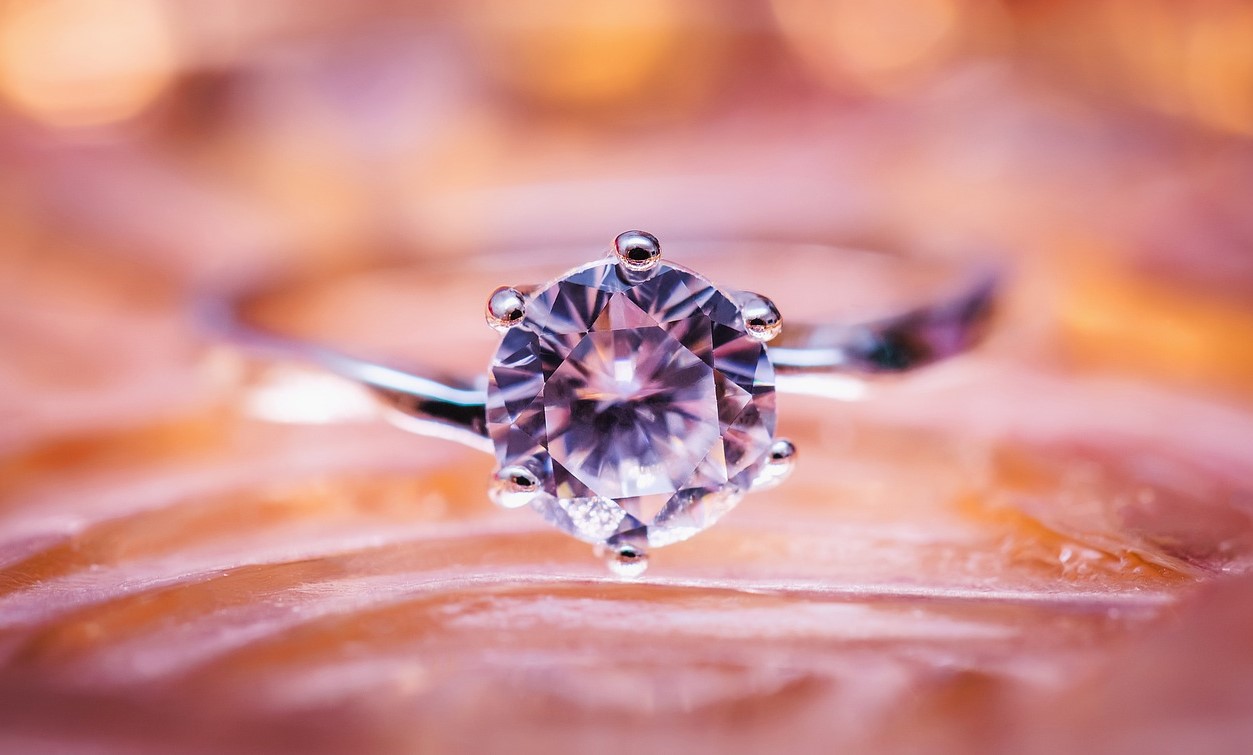
You’re looking at two diamonds. Same carat weight. Same cut. Same eye-clean clarity. One costs $4,500 and comes with a GIA certificate. The other costs $3,200 and has no paperwork at all. Which one do you buy?
Most people pick the cheaper one. That’s usually a mistake.
This article explains exactly what a diamond certificate is, why it matters, and when you can safely buy an uncertified stone. This is not legal advice — consult a licensed attorney for contract or purchase disputes.
What a Diamond Certificate Actually Tells You
A diamond certificate — also called a grading report — is a document issued by an independent gemological laboratory. It states the diamond’s quality based on the Four Cs: carat weight, color, clarity, and cut. It also includes details like fluorescence, symmetry, polish, and a diagram of internal inclusions.
The three major labs in the United States are:
- GIA (Gemological Institute of America) — the gold standard. Most strict, most consistent. A GIA-graded diamond holds its resale value better than any other.
- AGS (American Gem Society) — similar standards to GIA. Their cut grading system is actually more detailed.
- IGI (International Gemological Institute) — slightly softer grading. A diamond graded “VS1” by IGI might be “VS2” or “SI1” under GIA. Used heavily for lab-grown diamonds.
Then there are smaller labs like EGL (European Gemological Laboratory) and GCAL (Gem Certification & Assurance Lab). EGL is known for inconsistent grading — a diamond graded “F” color by EGL might be “H” or “I” under GIA. That’s a real problem if you’re paying for a color grade you’re not getting.
Here’s the key: a certificate is not an appraisal. It does not tell you what the diamond is worth. It only tells you what the diamond is. The price is determined by the market, the brand, and the seller’s markup.
Without a certificate, you are trusting the seller’s word. That might be fine if you know the seller personally. It’s a gamble if you don’t.
What a Certificate Does NOT Cover
No lab report tells you if the diamond is ethically sourced, conflict-free, or fairly traded. Those are separate claims made by the seller. If that matters to you, ask for documentation from the Kimberley Process or a supplier’s own ethical sourcing policy.
Also, certificates don’t grade fluorescence as “good” or “bad.” They just report the strength. Strong blue fluorescence can make a lower-color diamond look whiter in daylight — or make it look milky in rare cases. You have to see the stone in person.
The Real Cost Difference: Certified vs. Uncertified
Let’s talk numbers. I pulled recent prices from Blue Nile, James Allen, and a local jeweler in Chicago for comparison. All prices are for natural, round brilliant, 1.00 carat, G color, VS2 clarity, excellent cut diamonds.
| Source | Certification | Price |
|---|---|---|
| Blue Nile | GIA | $5,210 |
| James Allen | GIA | $4,980 |
| Local jeweler (Chicago) | GIA | $4,750 |
| Local jeweler (Chicago) | Uncertified | $3,400 |
| Pawn shop (online) | Uncertified | $2,800 |
The uncertified diamonds are 20–35% cheaper. That’s a real savings. But here’s what you don’t know with that uncertified stone:
- Is the color really G? It could be H, I, or even J. The seller is guessing — or inflating.
- Is the clarity really VS2? Inclusions might be visible to the naked eye, which would make it SI1 or SI2.
- Has the cut been measured? “Excellent” cut is a specific set of proportions. Without a certificate, you have no proof.
If you buy the $3,400 uncertified diamond and later discover it’s actually an H-color, SI1-clarity stone, you overpaid by about $600–$800. The certificate costs $150–$200 to get from GIA. You could have spent that money upfront and known exactly what you were buying.
For a $5,000 purchase, paying $200 for certainty is cheap insurance.
When You Can Safely Buy an Uncertified Diamond
There are three situations where skipping the certificate makes sense.
1. You’re buying from a trusted, established jeweler who offers a buyback or trade-in policy. Some jewelers — like Tiffany & Co. or Cartier — sell diamonds without GIA certificates because they stand behind their own grading. Tiffany, for example, has its own grading standards and will buy back the diamond at a guaranteed price. In that case, the certificate is less important because the jeweler’s reputation is on the line.
2. You’re buying a very small diamond — under 0.30 carats. At that size, color and clarity differences are nearly invisible to the naked eye. The cost of certification ($150–$200) can be 10–15% of the stone’s value. It’s not worth it.
3. You’re buying a diamond for a custom setting where the stone will be hidden or heavily pronged. If the diamond is set in a bezel or surrounded by other stones, you won’t see inclusions or color differences. You can save the money.
Outside those three scenarios, buy certified. Full stop.
The Problem with Uncertified Diamonds: Three Real Stories
I talked to three people who bought uncertified diamonds. Here’s what happened.
Sarah, Boston. Bought a 1.5-carat round diamond from a local jeweler for $6,200. No certificate. The jeweler said it was “G color, VS1.” Two years later, she wanted to upgrade. The new jeweler sent it to GIA for grading. Result: I color, SI2. The stone was worth about $3,800. She lost $2,400.
Mike, Austin. Bought an uncertified 0.9-carat diamond online for $2,900. The listing said “near-colorless, eye-clean.” When it arrived, the diamond had a visible brown tint and a black inclusion on the table. He returned it, but the seller charged a 15% restocking fee. Cost him $435 for nothing.
Priya, San Francisco. Inherited a diamond from her grandmother. No paperwork. She took it to a jeweler who said it was “probably 1 carat, I color.” She had it certified by GIA. It was 0.92 carats, K color, SI1. The jeweler had misgraded it by two color grades and one clarity grade. If she had sold it based on the jeweler’s word, she would have accepted a much lower price.
The pattern is clear: without a certificate, you are at the mercy of the seller’s honesty and competence. Even well-meaning jewelers can be wrong. GIA graders are trained to be consistent. Your local jeweler is not.
Lab-Grown Diamonds: Does Certification Matter the Same Way?
Yes — maybe more.
Lab-grown diamonds are chemically identical to natural diamonds. The same Four Cs apply. The same grading labs issue certificates. But there’s an extra layer: you need to know the diamond is lab-grown, not natural. A GIA or IGI certificate for a lab-grown diamond explicitly states “Laboratory-Grown” on the report. That’s critical if you ever want to resell it.
Here’s the catch: lab-grown diamond prices are dropping fast. A 1-carat lab-grown diamond that cost $3,000 in 2026 now costs around $1,200–$1,500 in 2026. That’s a 50–60% drop in four years. If you buy an uncertified lab-grown diamond, you have no way to prove its quality when you try to sell it. And the resale market for lab-grown diamonds is already thin — without a certificate, it’s nearly nonexistent.
For lab-grown diamonds, buy certified from a major lab (GIA or IGI). The certificate is your only proof of origin and quality. Without it, the stone is worth very little on the secondary market.
One more thing: some sellers claim their lab-grown diamonds are “better than GIA graded” because they come with a “manufacturer’s warranty.” That’s marketing, not grading. A warranty covers defects in the setting or the diamond’s physical integrity. It does not grade color, clarity, or cut. Demand a real lab report.
How to Verify a Diamond Certificate Before You Buy
You don’t have to trust the certificate at face value. There are steps you can take.
Step 1: Check the report number online. Every GIA, AGS, and IGI certificate has a unique number. Go to the lab’s website and search it. The report should match the diamond you’re looking at — same carat weight, same color and clarity grades, same inclusion plot.
Step 2: Look at the inclusion plot. The certificate includes a diagram of the diamond’s internal characteristics. Compare it to the actual diamond under magnification. The inclusions should match. If they don’t, the certificate might be for a different stone.
Step 3: Check the laser inscription. Most GIA-certified diamonds have a tiny laser inscription on the girdle (the outer edge) showing the report number. You can see it with a jeweler’s loupe. If the numbers match, the certificate belongs to that diamond.
Step 4: Be wary of “certificate included” listings on eBay or Craigslist. Sellers sometimes photograph a real GIA certificate but ship a different diamond. Always buy from a reputable online retailer like Blue Nile, James Allen, or Brian Gavin Diamonds, or from a local jeweler with a return policy of at least 30 days.
Step 5: If you already own an uncertified diamond, get it certified. GIA charges $150–$200 for a standard grading report. AGS charges similar. It takes 2–4 weeks. You mail the diamond to the lab, they grade it, and they send it back with the report. That $200 can save you thousands when you go to sell or insure the stone.
Back to the opening question. That $3,200 uncertified diamond? Unless you’re buying from a jeweler with a buyback policy, or the stone is under 0.30 carats, or it’s going into a hidden setting — pass. Spend the extra $1,300 on the GIA-certified stone. You’ll know exactly what you own, you’ll have resale value, and you’ll sleep better.