Most people assume a heavy solid wood table is the only option for a family with young children. That assumption costs families thousands of dollars in repairs and replacements. A 2026 survey by the National Kitchen and Bath Association found that 38% of families with children under 12 replaced their dining table within four years because the surface couldn’t handle daily use. The material you choose matters more than the brand or the style. This guide compares six common dining table materials on the factors that actually predict longevity in a busy household: scratch resistance, heat tolerance, stain resistance, repairability, and cost per year of use.
Solid Wood: The Gold Standard, But Only for Certain Species
Solid wood is not a single material. It is a category with enormous variation. A table made from white oak behaves differently than one made from pine or rubberwood. In a busy family context, the species determines whether the table lasts 30 years or 3.
Hardness Ratings Matter More Than Marketing Claims
The Janka hardness test measures how much force is required to embed a steel ball into the wood. Hardrock maple scores around 1,450. White oak scores about 1,360. Black walnut is softer at 1,010. Pine is 380. A child dropping a metal fork from table height onto pine will leave a visible dent. The same fork on hardrock maple may leave no mark at all.
For a family table, choose species with a Janka rating above 1,200. White oak, hardrock maple, and teak (1,155) are the safest bets. Avoid pine, poplar, and rubberwood unless you accept permanent surface damage within the first year.
Finish Is Half the Equation
An open-grain wood like white oak with a hand-rubbed oil finish will absorb red wine in under 30 seconds. The same wood with a catalyzed lacquer or conversion varnish can resist spills for hours. Factory-applied UV-cured finishes are the most durable. If you buy solid wood, ask specifically about the finish type. A table with a soft wax finish is not suitable for a family with toddlers.
Repairability Is the Real Advantage
Solid wood’s best feature is that it can be sanded and refinished multiple times. A deep scratch in a laminate table is permanent. The same scratch in solid white oak can be steamed out or sanded out. This makes solid wood the only material that can realistically last 20+ years in a busy home. Expect to refinish the top every 8–10 years if you use it daily.
Verdict: Solid white oak or hardrock maple with a catalyzed lacquer finish is the best long-term investment for busy families. Expect to pay $1,500–$4,000 for a 6-foot table. The cost per year over 20 years is $75–$200.
Wood Veneer: Looks Like Solid Wood, Fails Like Cardboard
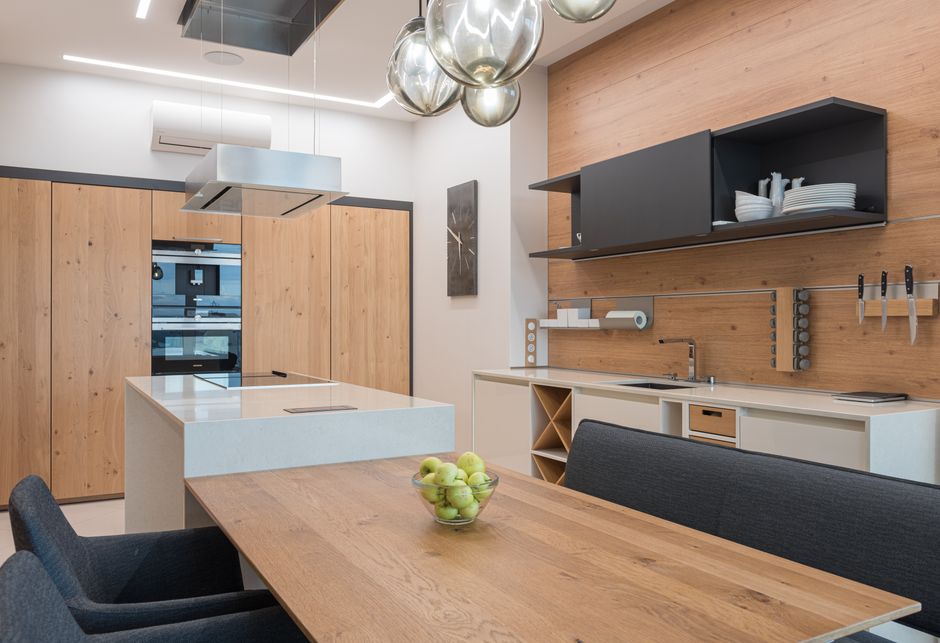
Wood veneer tables consist of a thin layer — typically 0.5mm to 3mm — of real wood glued onto a substrate of MDF or particleboard. From three feet away, they look identical to solid wood. The difference becomes visible the first time a glass of water sits on the surface for an hour.
The Delamination Problem
Water is the enemy of veneer. When moisture seeps through the finish and reaches the glue layer, the veneer bubbles, peels, or delaminates. This cannot be repaired. The table must be replaced or professionally re-veneered, which often costs more than a new table. A 2026 analysis by the Furniture Repair Council found that 72% of veneer table failures were caused by moisture damage, not impact damage.
Heat is equally dangerous. A hot serving dish placed directly on a veneer surface can soften the adhesive and cause permanent blistering.
When Veneer Makes Sense
Veneer is acceptable in a home without children or in a formal dining room used twice a year. For a family that eats dinner together every night, it is a poor choice. The risk of irreversible damage is too high, and the cost savings over solid wood are modest — typically 20–30% less.
Verdict: Avoid wood veneer for a primary family dining table. If budget forces this choice, require a high-pressure laminate backing and a thick, heat-resistant topcoat. Expect replacement within 5–8 years.
Laminate: The Underdog That Outperforms Its Reputation
Laminate is not the same material as the cheap countertop your grandmother had in the 1970s. Modern high-pressure laminate (HPL) from manufacturers like Formica, Wilsonart, or Pionite is a different product entirely. It consists of multiple layers of kraft paper impregnated with resin, fused under heat and pressure, then bonded to a substrate.
What Laminate Does Well
Laminate resists scratches, stains, and heat better than most solid wood finishes. A laminate surface can withstand a hot coffee cup without marking. Red wine, tomato sauce, and marker ink wipe off with a damp cloth. The surface is non-porous, so it does not absorb bacteria or odors.
The cost is significantly lower. A 6-foot laminate table typically costs $300–$800. If it lasts 8 years before needing replacement, the cost per year is $37–$100 — far less than solid wood.
The Failure Mode Is Edge Damage
Laminate’s weakness is the edge. If the laminate layer chips or peels at the edge, moisture enters the MDF core, which swells and crumbles. This is most common on tables with thin, sharp edges rather than thick, rounded profiles. Look for laminate tables with a thick edge band or a post-formed edge where the laminate wraps around the substrate.
Verdict: Laminate is the most practical material for families on a budget or families with children under 10 who will outgrow the need for a bulletproof table. Buy a table with a thick, rounded edge profile. Expect 6–10 years of heavy use.
Glass: The Aesthetic Choice That Requires Constant Vigilance
Tempered glass dining tables are popular in modern interiors. They are also the material most likely to be returned or replaced within the first year of family use. The problem is not breakage — tempered glass is surprisingly strong. The problem is maintenance.
Visible Imperfections Every Single Day
Glass shows every fingerprint, every water spot, every dust particle, every smudge from a child’s hand. In a family home, the table will look dirty within hours of being cleaned. Parents report spending 5–10 minutes per day wiping down a glass table. That adds up to 30–60 hours per year of cleaning time.
Scratches are permanent. Tempered glass cannot be polished or buffed. Once a scratch appears — from a metal utensil, a toy car, or a stray piece of gravel from a backpack — it is there forever.
Safety Concerns Are Real, But Overstated
Tempered glass shatters into small, relatively dull cubes rather than sharp shards. However, it does shatter. Thermal shock from a hot dish placed on a cold glass surface can cause spontaneous breakage. Impact from a hard object at the edge can also cause failure. The Consumer Product Safety Commission reports approximately 2,000 emergency room visits per year from glass table injuries, most involving children under 10.
Verdict: Glass is unsuitable for families with children under 12. The cleaning burden alone is unreasonable, and the risk of breakage, while low, is not zero. Choose glass only if you have a separate, child-free dining area.
Stone: Granite, Quartz, and Marble — The Tradeoff Between Beauty and Practicality
Stone dining tables are heavy, expensive, and visually striking. They also require specific care that many families do not anticipate. The three common stone materials behave very differently.
| Property | Granite | Quartz (Engineered) | Marble |
|---|---|---|---|
| Scratch resistance | Excellent (7 on Mohs scale) | Excellent (7) | Poor (3–4) |
| Stain resistance | Good when sealed | Excellent (non-porous) | Poor (highly porous) |
| Heat resistance | Excellent | Moderate (resin can scorch) | Poor (etches from acid) |
| Repairability | Difficult (needs professional) | Nearly impossible | Difficult (needs professional) |
| Weight (6-ft table) | 400–600 lbs | 350–500 lbs | 300–500 lbs |
| Typical cost | $2,000–$5,000 | $2,500–$6,000 | $3,000–$8,000 |
| Family suitability | Moderate | Low | Very low |
Granite Is the Only Stone That Works for Families
Granite is the hardest natural stone. It resists scratches from knives, forks, and toys. It handles hot pots directly from the stove. The catch is that granite is porous and must be sealed annually. If you skip sealing, red wine and oil will leave permanent stains. Even sealed granite can be stained by acidic liquids like lemon juice or vinegar if left for more than a few minutes.
Quartz is non-porous and never needs sealing, but the resin binder can scorch from hot pans. Marble is a disaster for families — it scratches from silverware, stains from orange juice, and etches from any acid. A marble table in a family kitchen will look damaged within weeks.
Verdict: Choose granite only if you are willing to seal it annually and wipe spills immediately. Avoid quartz if you frequently place hot dishes directly on the table. Avoid marble entirely for family use. Stone tables require you to change your behavior — not just buy a piece of furniture.
Metal: The Industrial Option That Few Families Consider
Metal dining tables are uncommon in homes, but they solve many of the problems that plague other materials. Stainless steel and powder-coated steel are the two primary options.
Stainless Steel Is Practically Indestructible
A stainless steel table top will not scratch from normal use. It will not stain from any food or drink. It will not burn from hot pans. It does not need sealing or refinishing. Cleaning requires only soap and water. The surface is non-porous and antimicrobial by nature.
The downsides are real. Stainless steel is cold to the touch. It dents if struck with enough force. It is noisy — dishes and utensils clatter against the surface. The industrial look does not suit every home. And stainless steel tables are heavy, typically 200–400 pounds for a 6-foot model.
Powder-coated steel offers color options and a warmer feel, but the coating can chip if struck with a hard object, and the chips cannot be repaired without repainting the entire surface.
Verdict: Stainless steel is the best choice for a family that prioritizes durability over aesthetics. It is the only material that can realistically last 30+ years with zero maintenance. Expect to pay $1,000–$3,000. The cost per year over 30 years is $33–$100.
How to Match Material to Your Family’s Actual Habits
No single material works for every family. The right choice depends on three specific factors: your children’s ages, your cleaning tolerance, and your budget for replacement.
Family with children under 6: Laminate or stainless steel. These materials survive spills, dropped utensils, and marker drawings. Expect to replace laminate after 6–8 years. Stainless steel will outlast your children.
Family with children ages 6–12: Solid white oak or hardrock maple with a durable finish. The table will get scratched, but those scratches can be sanded out when the children are older. Avoid veneer and marble at all costs.
Family with teenagers: Any material except glass and marble. Teenagers are less likely to cause surface damage but will still spill drinks. Solid wood or laminate both work well.
Family that eats out frequently: Veneer or glass. If the table is used fewer than 10 times per month, the durability requirements drop significantly. Spend less and accept a shorter lifespan.
Verdict summary: For the typical busy family eating dinner at home 5–7 nights per week, the best material is solid white oak with a catalyzed lacquer finish. It costs more upfront than laminate, but the ability to refinish it means it will last through your children’s entire childhood and beyond. If budget is tight, laminate is the honest choice — it will not last forever, but it will last long enough, and the replacement cost is low enough that you are not trapped.