Your bedroom is 10 feet by 12 feet. The bed takes up a third of the floor. The dresser you bought from a big-box store is too deep, so you can’t open the bottom drawer without bumping the wall. You have one small window that faces north. The room feels like a closet with a mattress in it.
You’ve seen the photos on Pinterest: airy Copenhagen lofts with white walls, sheepskin throws, and floor-to-ceiling windows. That’s not your room. But the principles behind those photos — light, function, restraint — can work in a 120-square-foot box. They just need to be adapted. Here’s how.
Why Scandinavian Design Works in Tight Spaces: The Logic of Restraint
Scandinavian design emerged from a specific constraint: long, dark winters and small, expensive apartments. It was never about empty rooms for aesthetic effect. It was about survival in limited space.
The core principle is simple: every object must earn its place. A chair that looks beautiful but is uncomfortable gets removed. A lamp that casts harsh shadows gets replaced. This isn’t minimalism as a lifestyle statement. It’s minimalism as a practical response to square footage.
In a small bedroom, this logic becomes essential. You don’t have room for decorative objects that don’t serve a purpose. You don’t have room for furniture that creates visual clutter. Every decision must answer one question: does this make the room feel larger or smaller?
Key takeaway: Scandinavian design succeeds in small spaces because it prioritizes function over ornament. If an object doesn’t work, it doesn’t stay.
Idea #1: Use Light Paint Colors, But Not the Ones You Think
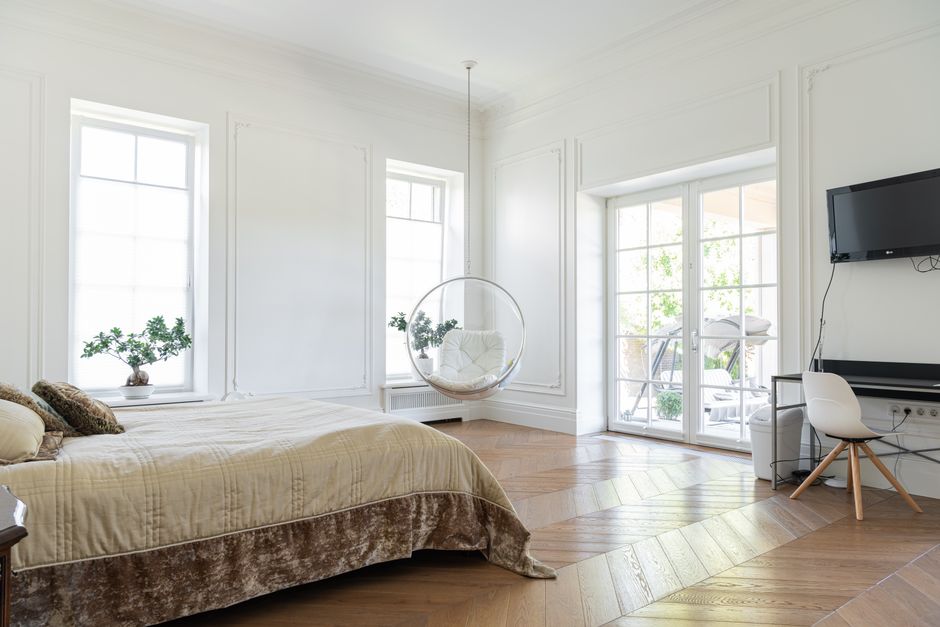
Pure white is the default recommendation for small rooms. It reflects light and makes walls recede. That’s true, but pure white also creates a clinical feel. In a north-facing room with limited natural light, pure white can look flat and cold.
Scandinavian designers use warm off-whites and pale greiges instead. The Swedish paint brand Nordsjö offers a shade called “Svanen” (The Swan) — a warm white with a hint of yellow undertone. It reads as white but adds warmth. In the US, Benjamin Moore’s “White Dove” (OC-17) achieves a similar effect.
For a bolder approach, try a pale grey-blue like “Fjord” from the Danish brand Flügger. It adds depth without making the room feel smaller. The trick is to keep the saturation low — you want a whisper of color, not a statement.
| Paint Type | Best For | Example Brand/Shade | LRV (Light Reflectance Value) |
|---|---|---|---|
| Warm off-white | North-facing rooms, low natural light | Benjamin Moore White Dove (OC-17) | 83.6 |
| Pale greige | Rooms with mixed light exposure | Sherwin-Williams Agreeable Gray (SW 7029) | 60.5 |
| Pale grey-blue | South-facing rooms, bright spaces | Flügger Fjord 1040 | 55.2 |
Verdict: For most small bedrooms, a warm off-white with an LRV above 80 is the safest choice. It opens the room without making it feel sterile.
Idea #2: Choose Low-Profile Furniture That Lets the Room Breathe
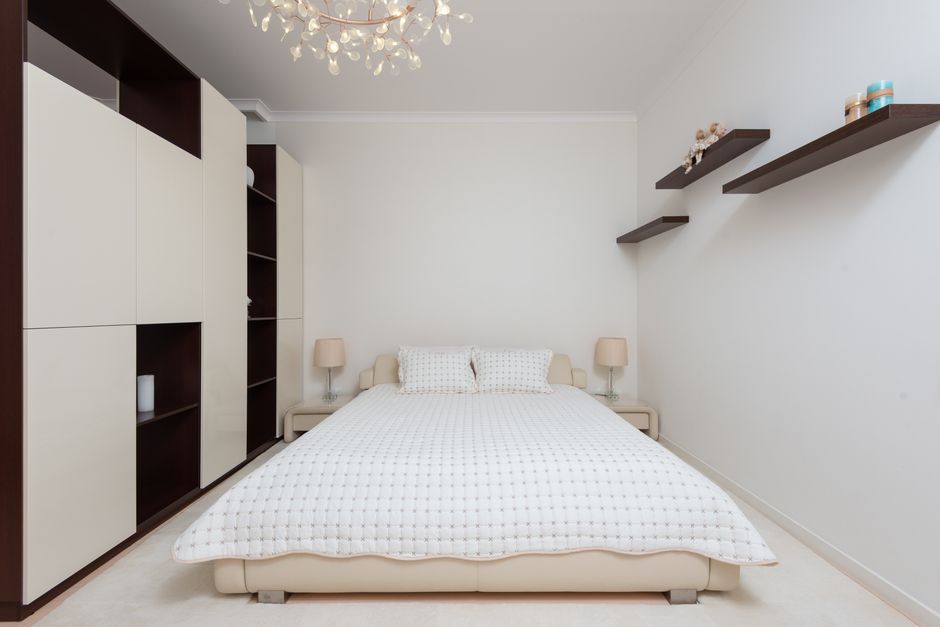
Standard bed frames sit 18 to 24 inches off the floor. In a small room, that height eats visual space. A platform bed with a low profile — 10 to 12 inches — creates a different proportion. The eye sees more wall above the bed, which makes the ceiling feel higher.
The IKEA Malm bed frame (now discontinued in some markets, but widely available secondhand) is a classic example. It sits low and has built-in storage drawers underneath. The Muuto Rest bed frame ($1,199 for a queen) takes this further: the headboard is only 24 inches tall, and the frame sits just 11 inches off the ground.
Dressers should follow the same logic. A 30-inch-tall dresser with legs creates visual space underneath. The HAY Palissade collection includes a low chest (27.5 inches tall, $495) that works well in tight spots. Avoid anything with a solid base that blocks the floor — you want light to pass under the furniture.
Common mistake: buying a tall, narrow dresser to save floor space. In a small room, tall furniture draws the eye upward, which can make the room feel narrow. A wide, low dresser is almost always better.
Idea #3: The 60-30-10 Color Rule (Applied to Scandinavian Palettes)
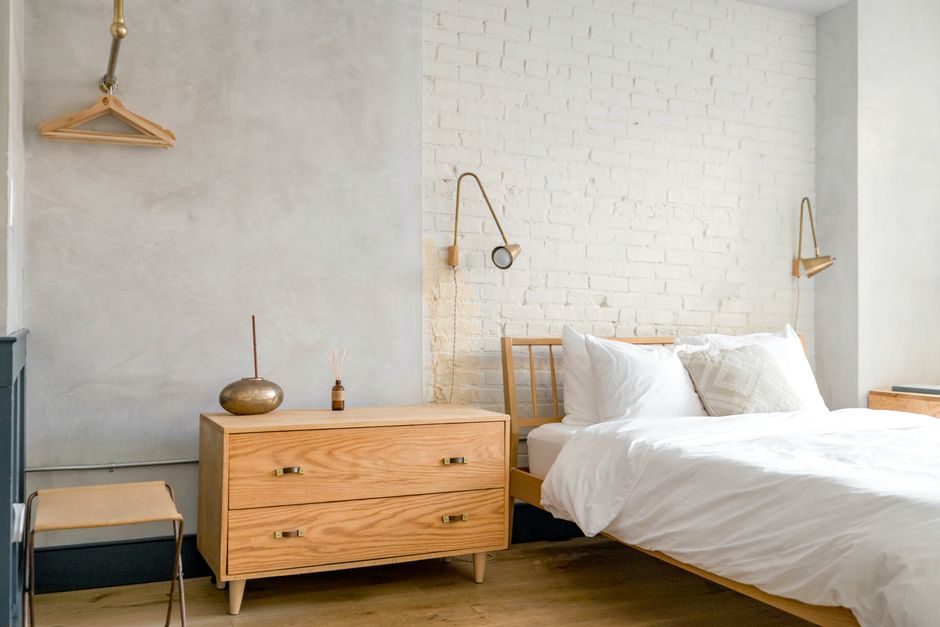
Interior designers use the 60-30-10 rule for color distribution: 60% dominant color (walls, large furniture), 30% secondary color (bedding, curtains), 10% accent color (pillows, art). In a Scandinavian bedroom, this rule prevents the room from feeling flat or chaotic.
Here’s how it works in practice:
- 60%: Warm white walls (see Idea #1), light wood floor, white bed frame
- 30%: Linen bedding in a muted grey or pale blue, wool throw in oatmeal
- 10%: One piece of art with a single pop of color — a mustard yellow frame, a ceramic vase in deep blue
The Danish brand Kvadrat makes wool textiles in the perfect 30% shades: their “Divina” collection includes a heathered grey (color 157) that works as a bed throw. For the 10% accent, a Muuto Dots vase in “Deep Blue” ($49) adds color without bulk.
Verdict: Stick to this ratio. If you add more than 10% accent color, the room starts to feel busy. Less is genuinely more here.
Idea #4: Wall-Mounted Lighting to Free Floor and Nightstand Space
In a small bedroom, every square inch counts. A floor lamp takes up 1.5 square feet. A table lamp on a nightstand takes up surface area you could use for a book, a glass of water, or nothing at all — which is better.
Wall-mounted sconces solve this. They provide task lighting for reading without occupying any horizontal space. The key is to mount them at the right height: 48 to 52 inches from the floor to the center of the sconce, depending on your bed height.
The IKEA RÖDULT sconce ($25) is a budget option with a clean, cylindrical design. For something more refined, the Muuto E27 wall lamp ($159) comes in six colors and has a 5.5-inch shade that doesn’t protrude too far from the wall. The Louis Poulsen PH 3/2 ($675) is the premium choice — its layered shade directs light downward without glare.
Wiring note: If you’re renting or don’t want to hire an electrician, look for plug-in sconces that mount to the wall but plug into a nearby outlet. The IKEA HÅRTE ($35) is a plug-in option with a cord cover.
Verdict: Wall-mounted sconces are the single most effective space-saving lighting solution for a small bedroom. Install them above the nightstands and reclaim that surface area.
Idea #5: Storage That Disappears (Not Just Hidden, But Invisible)
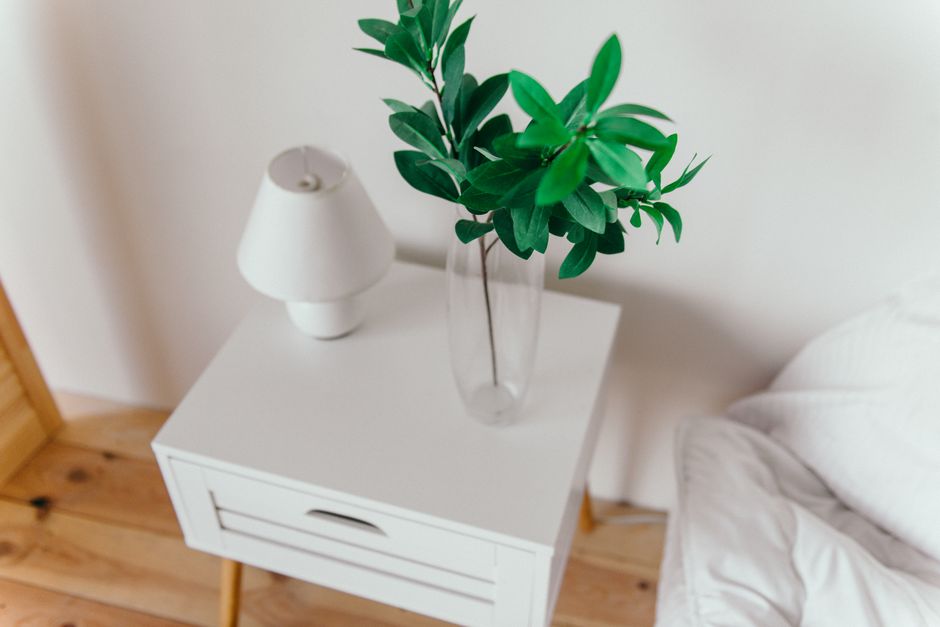
Most storage solutions in small bedrooms are visible: bins, baskets, open shelving. These create visual noise. Scandinavian design favors storage that integrates into the architecture.
Built-in wardrobes are the gold standard. If you can’t build in, the next best option is a floor-to-ceiling wardrobe with sliding doors. The IKEA PAX system ($350–$800 depending on configuration) can be customized to fit a 79-inch ceiling height. Use sliding doors instead of hinged ones — they don’t require clearance space.
Under-bed storage is obvious, but most people use shallow plastic bins that waste space. String Furniture makes a modular shelving system that includes a low-profile under-bed frame (10.2 inches tall, $89 per section). It slides out on casters and holds shoes, out-of-season clothes, or bedding.
Common mistake: buying storage containers that don’t match the room’s color palette. White bins with lids are fine. Clear plastic bins are not — they show the contents and create visual clutter. Stick to opaque, light-colored containers.
Verdict: The goal is storage that you don’t notice. If you can see the storage system, it’s not Scandinavian. Prioritize built-in or floor-to-ceiling solutions in a light color.
Idea #6: One Large Mirror, Placed Strategically
A mirror is the cheapest way to make a small room feel larger. It reflects light and creates the illusion of depth. But placement matters more than size.
In a small bedroom, the best position is opposite the window. This reflects the natural light back into the room, effectively doubling the daylight. If the window is on the north wall, place the mirror on the south wall. If the window is small, a large mirror (at least 36 inches wide) will amplify the light significantly.
The IKEA LINDBYN mirror ($79, 31×39 inches) is a simple, unframed option that works in most rooms. The HAY Around the Sun mirror ($195, 35-inch diameter) has a thin brass frame that adds warmth without bulk. For a floor mirror, the Skagerak Craftsman ($1,050) has a solid wood frame and leans against the wall, taking up zero floor space with its slim profile.
Warning: Don’t place a mirror directly across from the bed. It can create a disruptive visual effect, especially in low light. Angle it slightly toward the window instead.
Verdict: A single large mirror (36+ inches) placed opposite the window is the most effective optical trick for a small bedroom. Spend the money here — a good mirror lasts decades.
Idea #7: Edit Ruthlessly — The 30-Day Rule for Objects
Scandinavian design is not about buying the right things. It’s about removing the wrong things. Most small bedrooms have too many objects, not too few.
Here’s a practical test: for the next 30 days, remove everything from your bedroom that isn’t strictly functional. This means:
- No decorative pillows (keep one, max two)
- No books on the nightstand (keep one, if you’re currently reading it)
- No electronics visible (phone chargers, laptops, tablets — put them in a drawer)
- No clothes on the chair or floor
After 30 days, add back only the objects that you genuinely missed. You’ll find that most decorative items don’t make the cut. What remains is a room that feels calm, open, and intentional.
This isn’t about asceticism. It’s about making every object count. In a small space, clutter isn’t just messy — it makes the room feel smaller. Removing it is the cheapest renovation you can do.
Verdict: Before you buy anything new, remove everything unnecessary. The empty space is the most valuable design element you have.
The single most important takeaway: Scandinavian design in a small bedroom is not about copying a look — it’s about applying a logic of restraint where every object, color, and surface earns its place by making the room feel larger, lighter, and more functional.