A wet 15 cm plant pot can weigh more than 3 kg, which is why a pretty window ledge can turn into a sagging, stained mess by May.
The ledge is not a shelf
Plants create three separate problems
A window ledge has a narrow surface, changing temperatures, direct sunlight, and very little tolerance for spills, so treating it like a normal shelf is the first mistake; the cleanest setup gives each object one job, with the plant providing height, the tray catching water, and the remaining space staying empty.
Use less than the full width
The best rule is simple: fill no more than two-thirds of the ledge and leave the rest visible, because a row of five small pots usually looks busier than two plants grouped on one contained tray, while the open section gives your eye somewhere to rest and gives you room to wipe the glass.
My verdict: a window ledge works best as a controlled plant station, not a miniature greenhouse and not a display shelf for candles, books, ornaments, and pots all at once.
Measure the ledge before buying anything
Take five measurements
- Measure the ledge width from the inside edge to the glass.
- Measure the usable length between the side walls or window trim.
- Check the depth at three points, because old ledges often narrow near the corners.
- Measure the distance from the ledge to the window handle, lock, and opening line.
- Check the sill height above a radiator, register, or heater.
Apply the 70 percent rule
Use only about 70 percent of the measured depth. A 20 cm ledge should carry items no deeper than 14 cm, leaving a rear air gap and a clear path for cleaning. For length, subtract 10 cm from each end if the window has thick trim. That prevents pots from touching cold corners, catching curtains, or blocking the latch.
Keep the tray at least 2 cm away from the glass. Condensation collects there in spring, and trapped moisture can stain painted wood or swell MDF. If a radiator sits below the window, keep foliage at least 15 cm above the heat source and skip delicate plants that wilt when the air turns dry.
Choose a tray setup that contains water
The useful tray options
Pick one container system
For most ledges, the best choice is a single waterproof tray holding two or three inner pots. The IKEA NYPON is inexpensive and compact, but it needs a separate saucer. The IKEA SOCKER adds a sharper spring look, though its metal body can heat up in direct sun. A Gardener’s Supply 24-inch self-watering window box gives the cleanest line, but it takes more soil and becomes heavy after watering.
Choose the Lechuza Balconera Color 50 only when the ledge can carry its filled weight and the depth fits with room to spare. It solves daily watering, not poor placement. For a narrow ledge beside a kitchen sink, the Umbra Trigg is the better answer because it moves the visual height upward and leaves the working surface clear.
Choose plants by window direction, not by color
Match the plant to the light
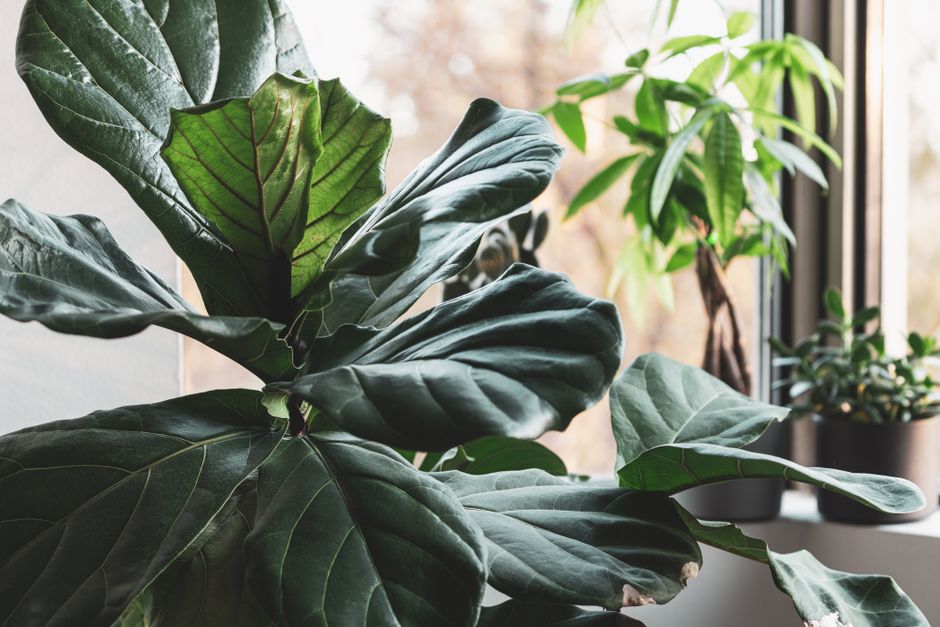
South-facing windows get the strongest light, so use herbs, jade plants, aloe, haworthia, and compact succulents when the glass does not have a heavy curtain. East-facing windows offer gentle morning sun and suit pothos, peperomia, spider plants, and many small ferns. West-facing windows bring hot afternoon light; place plants 30 to 60 cm back from the glass or use a sheer curtain. North-facing windows need shade-tolerant plants such as cast iron plant, snake plant, or low-light pothos.
Keep spring temperature swings in check
Do not place tropical foliage directly against cold glass at night. A plant can look fine in the afternoon and drop leaves after several cold evenings. Move pots 5 to 10 cm forward from the pane, especially in older homes with drafty frames. Avoid putting a plant above an active radiator, where warm dry air stresses leaves and dries the soil surface before the roots are ready.
Light also changes after trees leaf out. A window that looks bright in March may become shaded in May. Check the ledge at 9 a.m., noon, and 4 p.m. for one week before choosing sun-loving plants. The clear winner for an uncertain window is a compact pothos or peperomia because both handle moderate light better than most flowering plants.
Two plants and one tray beat a crowded row
My strongest recommendation is two different heights, one tray, and no decorative filler. That arrangement gives the ledge shape without turning it into a market stall.
Compare the three layouts
| Layout | Space needed | Water risk | Verdict |
|---|---|---|---|
| Two pots on one tray | 45 to 60 cm length | Low | Best for most living rooms |
| One 24-inch window box | 65 to 75 cm length | Medium | Best for herbs and one long window |
| Three hanging planters | 30 cm ledge plus wall clearance | Low on the ledge | Best for very narrow ledges |
Build visual order without matching everything
Use one low plant and one taller plant. A 12 cm IKEA NYPON can hold the low plant, while the taller one sits in a 15 cm pot at the rear of the tray. Keep the pot colors related but not identical: white with terracotta looks warmer than three shades of white, and dark green with galvanized metal suits a sharper kitchen.
The Lechuza Balconera Color 50 creates a single strong horizontal block, but it can overpower a narrow window. The Umbra Trigg works when floor and counter surfaces are already crowded because it adds height instead of depth. A hanging arrangement is also safer for children and pets, provided the wall anchor can carry at least twice the filled planter weight.
Fix the failure points before they become damage
Why do window ledges get stained?
Most stains come from watering directly inside a decorative pot. Water sits under the nursery container, wicks into wood, and leaves a pale ring that becomes harder to remove each week. Keep plants inside a removable inner pot, lift that pot to water at the sink, and return it only after excess water has stopped draining.
What should never sit on the ledge?
- Do not put candles beside dry foliage or hot glass.
- Do not use a tray with no raised edge; one missed watering will reach the paint.
- Do not place a heavy ceramic box above a radiator or on a thin MDF ledge.
- Do not crowd the window handle or cover a ventilation slot.
- Do not buy a long self-watering box until you know the filled weight.
- Do not use a trailing plant that brushes the glass if condensation is common.
The most common buying error is choosing a container for its empty appearance. Soil, water, and roots add weight. A 50 cm box can weigh 8 to 12 kg when filled, depending on its soil mix. If the ledge flexes when you press it, use a hanging planter or a lightweight plastic tray instead. The best-looking setup that damages the trim is a bad setup.
Use this verdict by window type
Clear recommendations
For a standard living-room ledge, choose two compact plants in one waterproof tray. For a sunny kitchen, choose a 24-inch herb box only if the ledge is deep and strong enough. For a narrow bedroom ledge, use one small pot or move the second plant to a wall-mounted hanger. For a drafty older window, keep the plants back from the glass and choose tough foliage over flowers.
Final comparison
| Window condition | Best arrangement | Skip | Clear verdict |
|---|---|---|---|
| Bright south window | Two succulents on a shallow tray | Moisture-loving ferns | Use low plants and leave heat space |
| Gentle east window | Two mixed-height foliage plants | Five-pot rows | Best setting for a balanced ledge |
| Hot west window | One plant 30 to 60 cm from glass | Metal pots in direct sun | Protect the leaves before adding more plants |
| Low-light north window | One pothos or cast iron plant | Flowering plants | Choose reliability over color |
| Narrow or weak ledge | One light pot or Umbra Trigg planter | Filled ceramic boxes | Move volume off the ledge |
The winning formula is not more plants. It is a measured ledge, one water-catching tray, two useful heights, and enough empty space to clean the glass. That keeps spring greenery visible instead of buried in clutter.