You’re staring at two boxes in the home center aisle. Delta on the left. Moen on the right. Both look solid. Both have lifetime warranties. Which one actually won’t drip in five years?
Here’s the short answer: Delta wins for internal durability and leak resistance. Moen wins for ease of installation and cartridge replacement. But the real answer depends on your specific sink setup and how much you hate calling a plumber. Let’s break it down.
1. The Core Difference: Cartridge Design
This is where the brands diverge at a fundamental level. Your faucet’s heart is the cartridge — the part that controls water flow and temperature. If it fails, you get drips or a stuck handle.
Delta’s Diamond Seal Technology
Delta uses a ceramic disc cartridge coated with diamond dust. The claim is 5 million life cycles — that’s about 20 years of normal use. The discs don’t wear against each other like rubber or plastic seals do. They stay smooth. In practice, this means Delta faucets rarely develop internal leaks. The tradeoff: if the cartridge does fail, replacing it is fiddly. You need a special tool (the Delta cartridge puller, about $8) and some patience.
Moen’s 1255 Duralock Cartridge
Moen uses a plastic-bodied cartridge with a rubber seal. It’s simpler. Replacing it takes 60 seconds with your fingers — no tools required. That’s the big selling point. But the rubber seal can degrade over time if you have hard water. Moen’s warranty covers the cartridge for life, but you’ll be swapping it every 5–8 years in mineral-heavy water. The replacement cartridge costs about $15–20, and you can do it yourself without shutting off the water supply line (the built-in shutoff valves make it mess-free).
Verdict: If you never want to think about your faucet internals for 15+ years, pick Delta. If you want the easiest DIY repair possible when something does go wrong, pick Moen.
2. Finish Durability: Who Fades First?
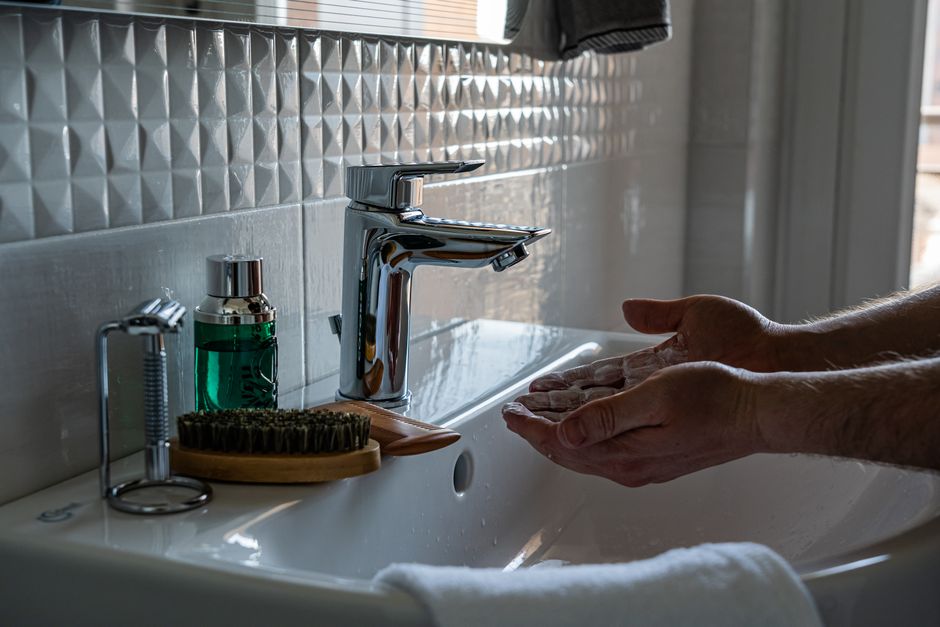
Both brands offer chrome, stainless steel, matte black, and bronze finishes. But they apply them differently.
Delta’s SpotShield Stainless
Delta’s SpotShield finish is a clear winner for anyone who hates wiping water spots. It’s a proprietary coating that resists fingerprints and mineral deposits. In a kitchen with hard water, a standard chrome faucet looks grimy after a week. SpotShield stays clean-looking for months with just a quick wipe. It’s available on their Leland and Trinsic models. The downside: it adds about $30–50 to the price.
Moen’s LifeShine Finish
Moen uses a physical vapor deposition (PVD) process for their LifeShine finish. It bonds the color to the metal at a molecular level. This means it won’t chip, peel, or tarnish. It’s excellent for matte black and bronze finishes — those are notoriously bad on cheaper faucets. Moen’s Align and Arbor models use this. However, LifeShine doesn’t resist water spots as well as SpotShield. You’ll be wiping it down more often.
Verdict: For low-maintenance looks, Delta’s SpotShield is better. For color longevity (no chipping), Moen’s LifeShine wins.
3. Warranty: Read the Fine Print
Both brands advertise a “lifetime limited warranty.” But they don’t mean the same thing.
| Feature | Delta | Moen |
|---|---|---|
| Coverage on finish | Lifetime (no fading, tarnishing, or peeling) | Lifetime (no chipping, peeling, or corrosion) |
| Coverage on cartridge | Lifetime (parts only) | Lifetime (parts only) |
| Labor coverage | None | None |
| Replacement part shipping | Free (phone or online request) | Free (phone request only) |
| Proof of purchase required? | Yes (keep your receipt) | Yes (keep your receipt) |
Key takeaway: Neither warranty covers the cost of a plumber to install the replacement part. That’s on you. Delta’s online part ordering is slightly more convenient, but Moen’s phone support is faster (average hold time under 5 minutes in 2026).
4. Common Failure Modes (What Breaks First)
Here’s what actually goes wrong with each brand, based on plumber forums and consumer reports.
Delta Failure Modes
- Handle wobble: The set screw that tightens the handle to the stem can loosen over time. Tighten it with a 3/32-inch hex key. Takes 30 seconds.
- Spray head retraction: On pull-down models, the weight on the hose can slip, causing the head to not retract fully. Reseating the weight fixes it.
- Cartridge stuck: If you wait too long to replace a leaking cartridge, mineral deposits can lock it in place. You’ll need the puller tool and some penetrating oil.
Moen Failure Modes
- Rubber seal degradation: Hard water eats the rubber seal inside the cartridge. You’ll get a slow drip from the spout. Swap the cartridge ($15–20) every 5–8 years.
- Handle stiffness: The plastic cartridge can warp slightly if you overtighten the handle. Back off the retaining nut slightly.
- Spray head button failure: The button that switches between stream and spray on pull-down models can get stuck if debris gets in it. Rinse the head under hot water.
5. When NOT to Buy Delta (and Buy Moen Instead)
Delta is great. But it’s not for everyone.
Buy Moen if:
- You have hard water and don’t want to deal with stuck cartridges. Moen’s plastic cartridge is easier to swap.
- You’re installing the faucet yourself and want the easiest instructions. Moen’s Duralock quick-connect system is genuinely simpler than Delta’s.
- You want a specific color like matte black or brushed bronze. Moen’s LifeShine finish is more durable on dark colors.
- You plan to move within 10 years. Moen’s easier repair process makes it more appealing to a future buyer who might not want to call a plumber.
6. When NOT to Buy Moen (and Buy Delta Instead)
- You want a faucet that will last 20+ years without any internal work. Delta’s Diamond Seal cartridge is more robust.
- You hate cleaning water spots. Delta’s SpotShield finish is a real time-saver.
- You have a high-end sink (like a farmhouse apron-front) and want a faucet with a premium feel. Delta’s Trinsic Pro Touch2O ($400–$500) has a solid metal build and touch activation that Moen doesn’t match.
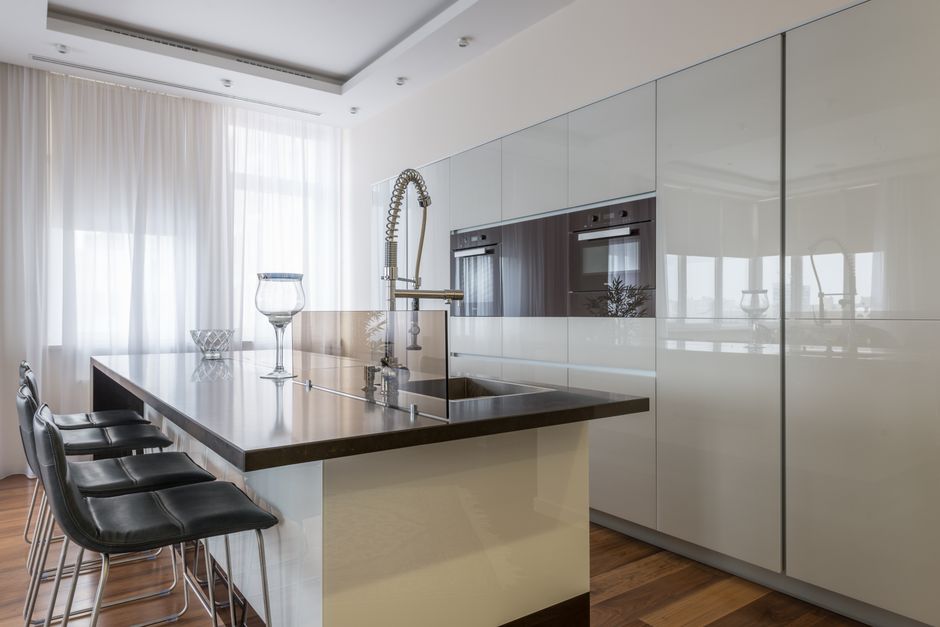
- You need a commercial-style spring faucet. Delta’s Leland Pro ($350–$450) has a better spring tension mechanism than Moen’s equivalent.
7. The Only Two Models You Should Consider in 2026
If you’re overwhelmed by options, narrow it down to these.
For Most People: Delta Trinsic Pull-Down (Model 9178-AR-DST)
This is the best all-around kitchen faucet under $300. It has the Diamond Seal cartridge, SpotShield finish, a magnetic docking system for the spray head, and a 20-inch pull-down hose. The brushed nickel version (9178-BL-DST) is about $280. It’s quiet, smooth, and doesn’t leak. The only complaint: the spray head button is a bit small for large hands.
For DIYers: Moen Arbor Motionsense (Model 7594EWSRS)
This is the easiest faucet to install and maintain. It has a motion sensor (wave to turn on), a pull-down spray head, and the Duralock cartridge. The spot-resistant stainless finish is decent, but not as good as Delta’s SpotShield. Price: about $320. The sensor battery lasts about 18 months. Pro tip: buy a pack of 4 AA lithium batteries — they last longer than alkalines in this unit.
Both brands sell millions of faucets a year. Both will work. But if you want a faucet that feels solid and stays dry, get the Delta Trinsic. If you want a faucet you can fix yourself in 5 minutes with no tools, get the Moen Arbor. That’s the choice.