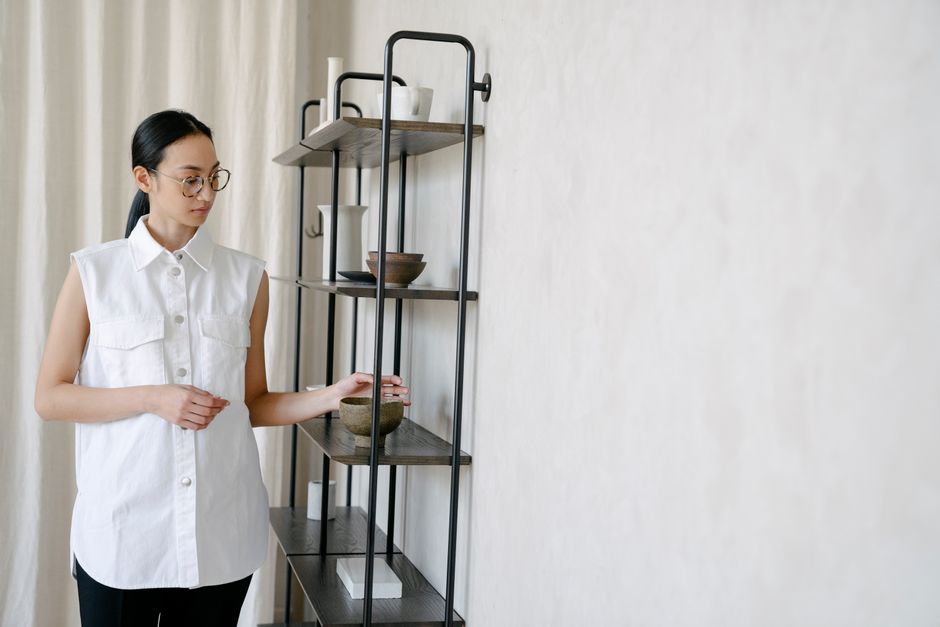
The common mistake is treating January like a decorating deadline. After holiday ornaments come down, many shelves look bare, so the instinct is to buy pale candles, winter signs, new vases, and small seasonal objects. That usually creates a second layer of clutter. January shelf styling with what you already own works better when you treat the shelf as a composition that needs editing, not as a blank space that needs filling.
The goal for January 2026 is simple: make the room feel lighter, warmer, and more settled without copying Christmas or forcing a winter theme. You need contrast, height, texture, and a few open gaps. The objects already in your home can supply all four.
Use this five-step reset before moving anything back
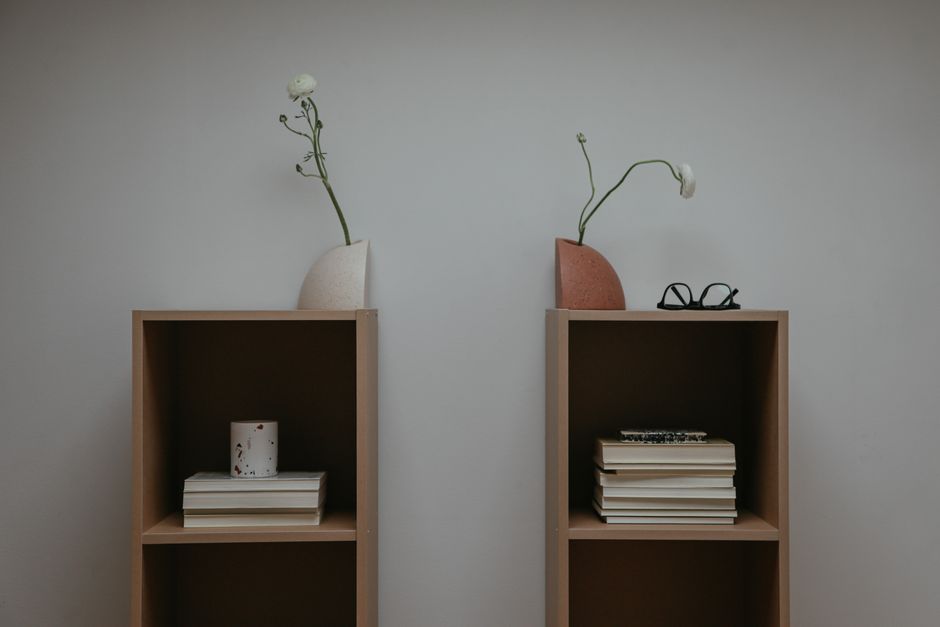
Start with a clean surface
- Remove every object from the shelves, including pieces that you plan to keep. Dust the shelf, wall, brackets, and nearby trim. A clean background makes the final arrangement look sharper without adding anything.
- Group what you own by type: books, framed art, bowls, baskets, plants, candles, collected objects, and useful storage pieces. Do not group by room. A bathroom basket or kitchen bowl may solve a visual problem in the living room.
- Choose three anchors. Pick one tall item, one wide item, and one object with a dark or strong outline. These anchors create the basic shape before you add small details.
- Place the tallest anchor off-center. The left third or right third usually works better than the exact middle. Keep the largest piece near the back so smaller objects can sit in front without blocking it.
- Add pairs and pauses. Repeat a color, material, or shape in another zone, then leave a visible gap beside the repetition. Stop when the shelf feels balanced from across the room.
Check the arrangement from a distance
Stand six to eight feet away and look at the shelf for ten seconds. Notice the first place your eyes land. If every object has the same size, raise one group with a few books. If the shelf feels too busy, remove the smallest item in the busiest cluster. If one side looks heavy, move a wide object toward the empty side instead of adding a new decoration.
This method works because it solves the real problem: weak hierarchy. January shelves rarely need more personality. They need a clear first read, a supporting shape, and enough breathing room for the wall to remain visible.
A simple shelf formula for height, depth, and empty space
Use the table as a starting point for a shelf that is roughly 10 to 14 inches deep. The measurements are not rules for every room, but they give you a practical way to judge proportion when the arrangement feels vague.
| Shelf zone | Useful height or gap | Best role | January limit |
|---|---|---|---|
| Back layer | 8 to 12 inches tall | Books, framed art, or a tall vessel | One main anchor per shelf |
| Middle layer | 5 to 8 inches tall | A bowl, folded textile, or small stack | Two related pieces maximum |
| Front layer | 2 to 5 inches tall | A small collected object or candle | Use only where it adds contrast |
| Open gap | 2 to 4 inches wide | Visual rest between groups | Keep at least one clear gap |
Balance height before color
People often try to fix a shelf with color first. Height usually matters more. A shelf full of pale objects can still look crowded if every piece sits at the same level. Build a low-high-low rhythm across the wall, then repeat one color to connect the groups.
Use depth to avoid a flat display
Place larger pieces toward the back and smaller pieces slightly forward, but do not hide the useful shape of every object. A three-inch overlap creates depth; a complete stack that blocks half the shelf creates visual noise. For narrow shelves, keep front pieces shallow so the arrangement does not project into the room.
The verdict is clear: if your shelf feels dull, change height and spacing before changing the color palette. Those two adjustments create the biggest improvement with the fewest possessions.
Do you need to buy anything for a January shelf?
When the shelf feels empty
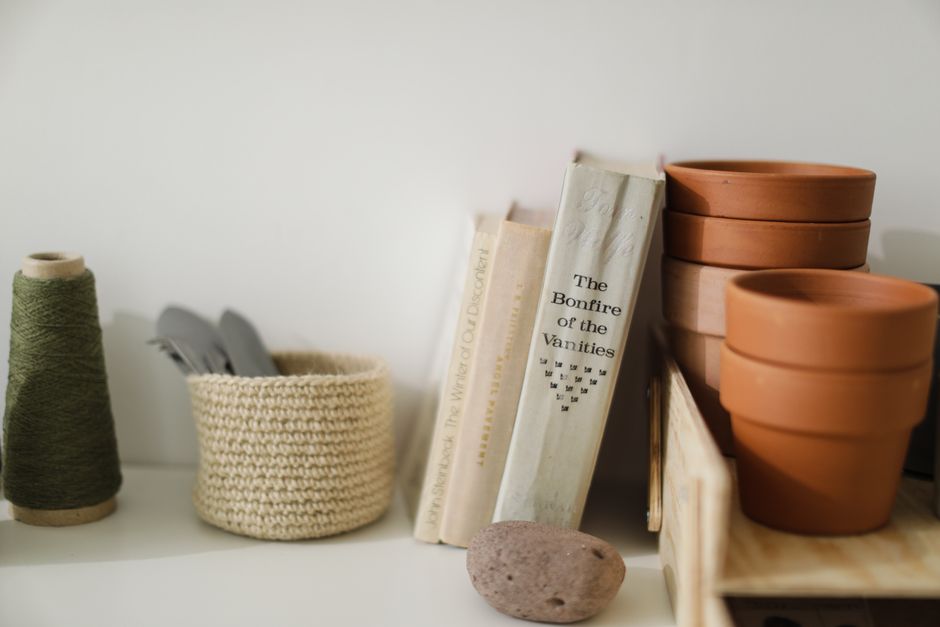
You probably do not need to buy anything. An empty-looking shelf often lacks one tall anchor, not more small objects. Test a stack of books, a framed print, a serving board, a basket, or a plant from another room before spending money. Move useful household objects through the space for a week. If the arrangement improves, the problem was placement rather than a missing purchase.
When not to buy seasonal decor
Do not buy a winter sign, a new neutral vase, or a matching set just to fill one awkward corner. Those purchases solve a short-term discomfort and often create storage work later. Buy only when the shelf has a real functional gap, such as no way to raise a short object, conceal a cable, or protect a fragile item. The best January decision is usually to wait, live with the edited shelf for seven days, and reassess it in different daylight.
That is the whole verdict: shop your home first, and postpone any purchase until you can name the exact problem it solves. A shelf that needs a better composition will not improve because it contains one more attractive object.
How to make a mixed collection look intentional
Give unrelated objects one shared job
A shelf becomes coherent when each group has a role. Books can add height and color. A bowl can gather small items. A frame can create a vertical plane. A basket can hide practical clutter. A plant can soften a hard corner. The objects do not need to come from the same set, but they should not all compete for attention.
Start with the largest visual mass on each shelf. That may be a stack of books, a wide basket, or a framed piece. Put the second-largest mass on the opposite side or on the shelf above. Then place smaller objects near, but not directly against, those anchors. This creates a loose triangle instead of a row of unrelated items.
Repeat material without repeating shape
Material repetition creates connection while shape variation keeps the arrangement alive. Pair a wooden frame with a woven basket, or repeat ceramic in two different forms. Avoid placing three round objects together unless you want a deliberate collection. Circles beside circles can look like a display of spare parts. A round bowl beside a rectangular book stack has more tension and reads more clearly.
Let useful objects stay useful
January styling works best when it respects daily life. Keep a basket available for remotes, a bowl near the entry for keys, or a small stack of books that people actually read. Decorative objects become easier to live with when they support a routine. If an arrangement looks beautiful but forces you to move five things every evening, it will not last.
Use a phone photograph as a neutral test. The camera flattens the scene and reveals repeated shapes, crowded corners, and accidental gaps. Take one photo straight on and another from the doorway. If the shelf reads as one heavy block, separate the groups. If one object dominates both photos, either move it lower or remove it.
The strongest mixed shelves do not hide their history. They show books, useful containers, inherited pieces, and everyday objects, but they control the spacing between them. That balance gives the display character without making it look staged.
January shelf styling questions with clear answers
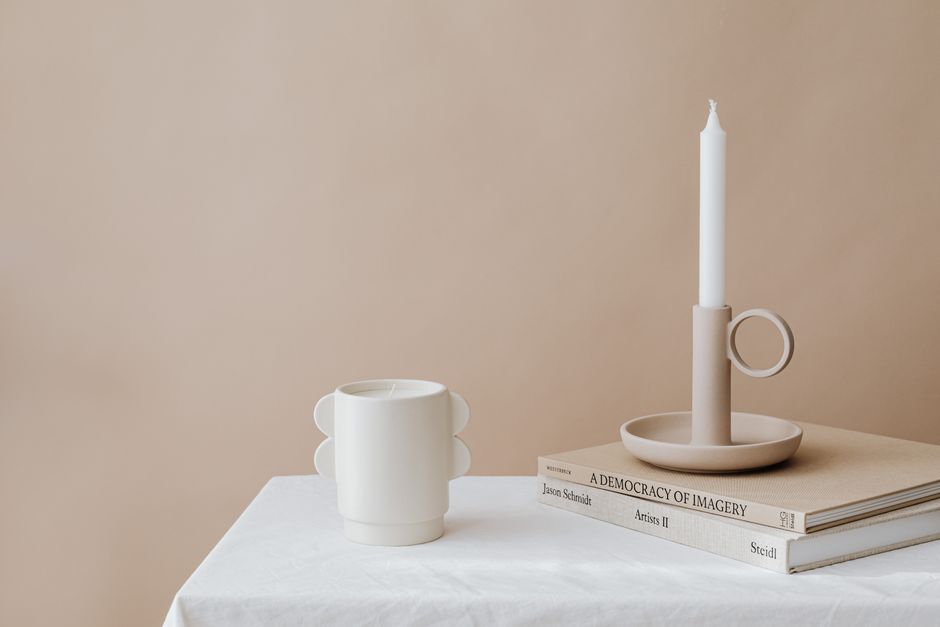
Should every shelf use the same arrangement?
No. Repeat one connecting detail instead, such as a warm wood tone, a similar amount of open space, or one repeated color. Identical arrangements make a wall feel copied and leave no room for the objects you already own. Keep the overall visual weight balanced while allowing one shelf to hold books and another to hold a wider object.
How many objects should sit on one shelf?
Start with three groups, not a fixed object count. One group might contain four books, another a bowl, and another a frame with a small object in front. A deep shelf may support more pieces than a narrow ledge, but every added item should either change height, repeat a color, or solve a storage need. If it does none of those jobs, remove it.
What should replace holiday decorations?
Use the same structure with quieter materials. Replace a bright cluster with a stack of neutral books, a bowl, a framed print, a basket, or a plant. You do not need a seasonal substitute for every ornament. Leaving one section empty often gives the remaining objects more presence and lets the room move naturally from December into January.
Once the shelf feels balanced, stop adjusting it. January styling should make the room easier to live in, not create a daily project. The final arrangement may contain familiar objects, but the new spacing will make them feel deliberate again.