Most people think a kitchen-dining room combo is about picking matching paint colors and buying a nice table. That’s why so many open-plan spaces feel awkward. People walk into each other. The dining table blocks the fridge. The island has stools that hit your knees.
These eight rules fix that. They cover traffic flow, furniture dimensions, lighting placement, and material transitions. No fluff. Just numbers you can measure against your floor plan.
Rule 1: The 42-Inch Walkway Minimum (And Why 36 Inches Fails)
Standard hallways are 36 inches wide. That works for walking past a wall. It does not work when someone is seated at a dining table with their chair pulled back 18 inches.
The real number is 42 inches between the edge of your dining table and the nearest counter, island, or wall. If you have a high-traffic route behind seated diners, bump that to 48 inches. A person carrying a hot dish needs 54 inches to pass safely behind someone who might push their chair back without looking.
Measure Chair Depth First
Standard dining chairs are 18-22 inches deep from front edge to back leg. When someone sits, they push the chair back 6-10 inches. That means a seated person takes up roughly 28 inches of depth. Add your 42-inch clearance, and you need a minimum of 70 inches from table edge to counter.
Test this with your own furniture. Pull a chair out to sitting position. Measure from the back of that chair to the nearest obstacle. If it’s under 40 inches, you’ll be squeezing past people at every meal.
Rule 2: Island Overhang — The 15-Inch Standard Is a Compromise
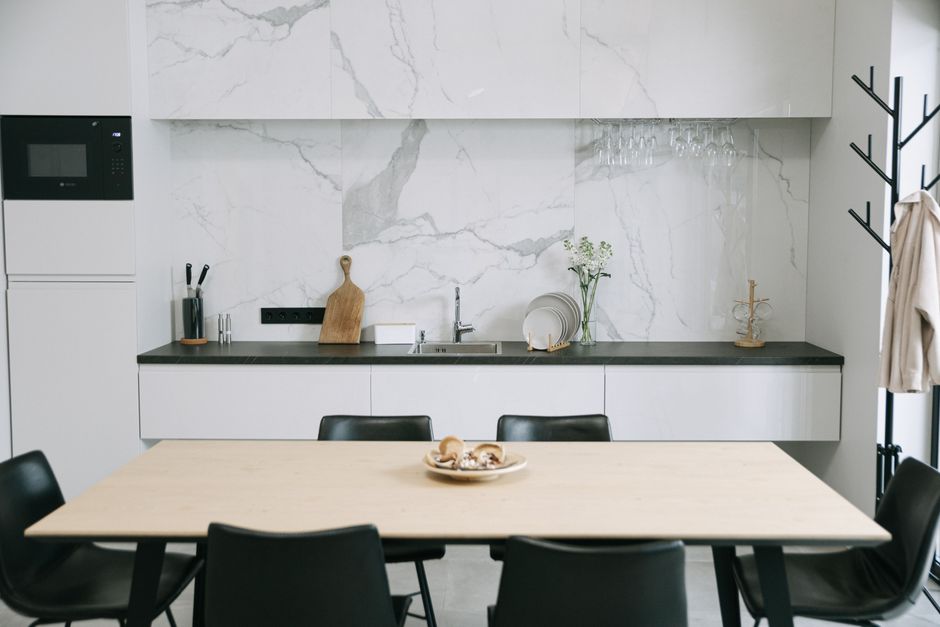
Kitchen islands with seating look great in photos. In real life, they fail when the overhang is too short for legroom or too long that it looks odd.
The standard overhang is 15 inches from the cabinet face to the edge of the countertop. That works for average-height people (5’8″ to 5’10”). For taller people, 18 inches is better. For shorter people, 12 inches keeps them from tipping forward.
Here’s the catch: a 15-inch overhang with a 24-inch deep countertop means your total island depth is 39 inches. That’s fine for a single row of stools. If you want stools on both sides, you need a minimum 60-inch wide island with countertops on both sides, or the stools will hit each other’s knees.
| User Height | Recommended Overhang | Stool Height | Counter Height |
|---|---|---|---|
| 5’4″ and under | 12 inches | 24 inches | 36 inches |
| 5’5″ to 5’9″ | 15 inches | 26 inches | 36 inches |
| 5’10” and over | 18 inches | 28 inches | 36 inches |
The IKEA KARLBY countertop in oak ($179 for 74 inches) is a solid choice for island overhangs because it’s thick enough to feel substantial without needing extra support brackets at 15 inches.
Rule 3: Lighting Placement — The 30-Inch Rule for Pendants
Pendant lights over a dining table or kitchen island are often hung too high or too low. The rule: 30 inches from the bottom of the fixture to the table surface. For an island with a 36-inch counter height, that means the bottom of the pendant sits at 66 inches from the floor.
For linear pendants over a rectangular table, space them so the fixture is roughly one-third the width of the table. A 72-inch table gets a 24-inch wide pendant or two 12-inch pendants spaced 24 inches apart.
The Louis Poulsen PH 5 ($875) is a classic choice because its layered shades diffuse light evenly without glare. The Flos IC Lights ($495 for the small pendant) work well over islands because the thin cord and small glass globe don’t block sightlines.
Dimmer Switches Are Not Optional
A single bright overhead light makes a dining room feel like an operating room. Install a dimmer on every fixture over the table and island. The Lutron Caseta dimmer ($55) pairs with your phone and lets you set three preset brightness levels. Morning coffee at 100%. Dinner at 40%. Cleaning up at 70%.
Rule 4: The Dining Table Should Not Touch the Kitchen Zone
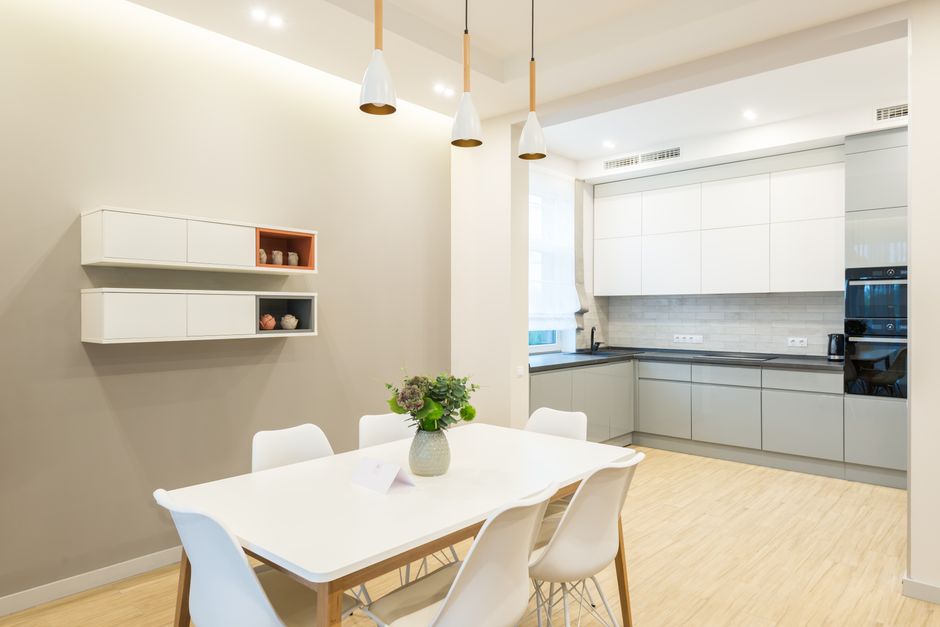
This is the most common mistake. People place a dining table directly next to the kitchen island or counter. The result: someone cooking backs into someone eating. Spills happen. It feels cramped.
Create a clear visual and physical separation between the cooking zone and the dining zone. Use a rug under the dining table to define the space. The rug should extend at least 24 inches beyond the table on all sides so chairs stay on the rug when pulled out.
For a 60-inch round table, you need a 108-inch round rug. The IKEA STOENSE flatweave rug ($149 for 79×118 inches) is a practical option because it’s washable and won’t show every crumb.
If your floor plan forces the table close to the kitchen, use a room divider or a low bookshelf to create a visual break. The IKEA KALLAX shelf unit ($89) laid horizontally creates a 30-inch high barrier that defines zones without blocking light.
Rule 5: Traffic Flow — The Triangle Test
The kitchen work triangle (sink, stove, fridge) is well-known. What people ignore is how the dining area intersects that triangle. If someone has to walk through the cooking zone to reach the dining table, you have a problem.
Draw a straight line from the stove to the dining table. If that line crosses the main walkway from the sink to the fridge, you need to rearrange. The fix is usually moving the dining table to the opposite side of the room or rotating it 90 degrees.
In a galley-style kitchen that opens into a dining room, position the table so the longest side runs parallel to the kitchen counter. This creates a natural corridor along the short side of the table for people to pass through.
When to Skip an Island
Islands are popular, but they often block traffic flow in narrow kitchens. If your kitchen is less than 12 feet wide, skip the island entirely. Instead, use a narrow peninsula that extends from one wall. The IKEA SEKTION base cabinet system lets you build a 12-inch deep peninsula that adds counter space without blocking walkways.
Rule 6: Material Transitions — Where to Change Flooring
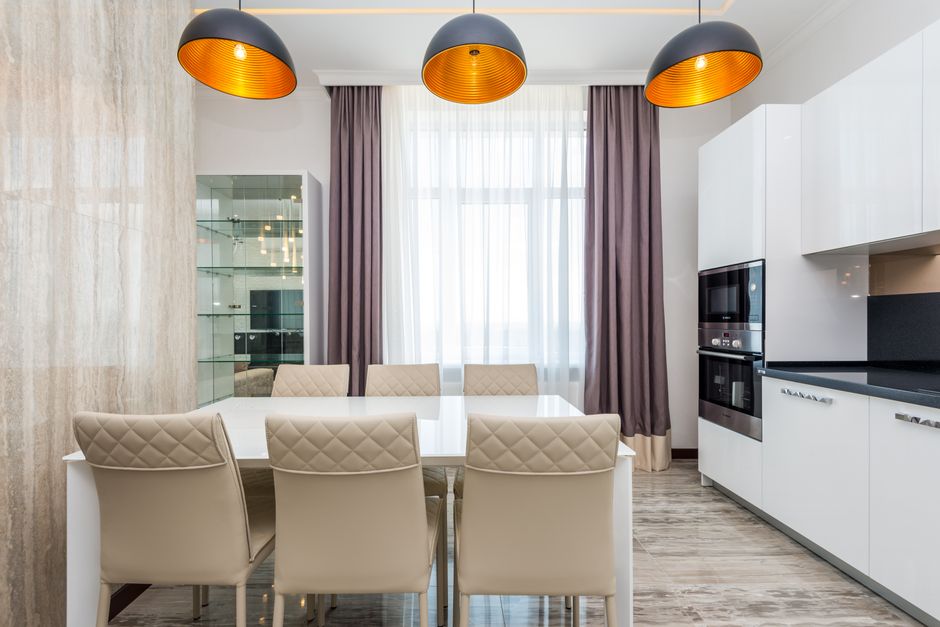
Open-plan spaces need visual cues to separate zones. Changing flooring material between the kitchen and dining area is the most effective way to do this. But the transition point matters.
Change flooring at the edge of the kitchen cabinetry, not at the dining table. If you run tile under the table, it looks like an afterthought. If you run wood into the kitchen, the water-resistant tile ends right at the cabinet toe kick, which looks intentional.
A 1-inch T-molding strip (available at Home Depot for $12 per 6-foot piece) bridges the height difference between tile and hardwood. For a seamless look, choose a tile that matches the undertone of your wood floor. A warm oak floor pairs with a beige or cream tile. A gray floor pairs with a cool white or slate tile.
The Daltile Restore line ($3.50 per square foot) in the color “Ash” works with most gray-toned floors. For warm wood, the MSI Luma Bella line ($5 per square foot) in “Carrara” has warm veining that bridges the gap.
Rule 7: Furniture Scale — The 36-Inch Rule for Dining Tables
People buy dining tables that are too big for their room because they think “bigger means more seating.” The result: you can’t walk around the table. The rule: leave 36 inches between the table edge and every wall or piece of furniture.
For a room that is 12 feet wide (144 inches), subtract 72 inches for walkways (36 inches on each side). That leaves 72 inches for the table width. A 60-inch wide table fits comfortably. A 72-inch wide table is tight.
For length, allow 24 inches of table edge per person. A 72-inch table seats six comfortably (three per side). A 96-inch table seats eight. The West Elm Mid-Century Dining Table ($1,299 for 72 inches) is a good benchmark because its slim legs maximize seating without visual bulk.
Round Tables Save Space
In a square room (12×12 feet), a 48-inch round table seats four and leaves 36 inches of walkway on all sides. That same room with a 60-inch round table leaves only 30 inches of walkway — tight but workable. The Article Sinner Round Dining Table ($1,095) in oak is a solid choice because the pedestal base means no legs to bump into.
Rule 8: Storage That Serves Both Zones
A kitchen-dining room combo needs storage that works for both cooking and eating. A single buffet or sideboard placed between the two zones solves the problem.
The buffet should be 60-72 inches long and 18 inches deep. The RH Restoration Hardware Belgian Flax Buffet ($2,995) is pricy but the 72-inch length and 19-inch depth fit most spaces. The CB2 Avery Sideboard ($999) at 60 inches is a more affordable option with the same depth.
Use the top surface for serving dishes during meals and for coffee equipment in the morning. Inside, store table linens, extra plates, and serving bowls. The bottom cabinets hold bulky items like a stand mixer or a large platter that doesn’t fit in the kitchen cabinets.
If you don’t have room for a full buffet, a bar cart works. The IKEA BEKVAM bar cart ($49) is narrow enough (15 inches wide) to tuck against a wall and holds wine glasses, bottles, and napkins.
The single most important takeaway: measure your walkways first, buy furniture second. A 42-inch clearance between every obstacle makes every other design decision easier.