
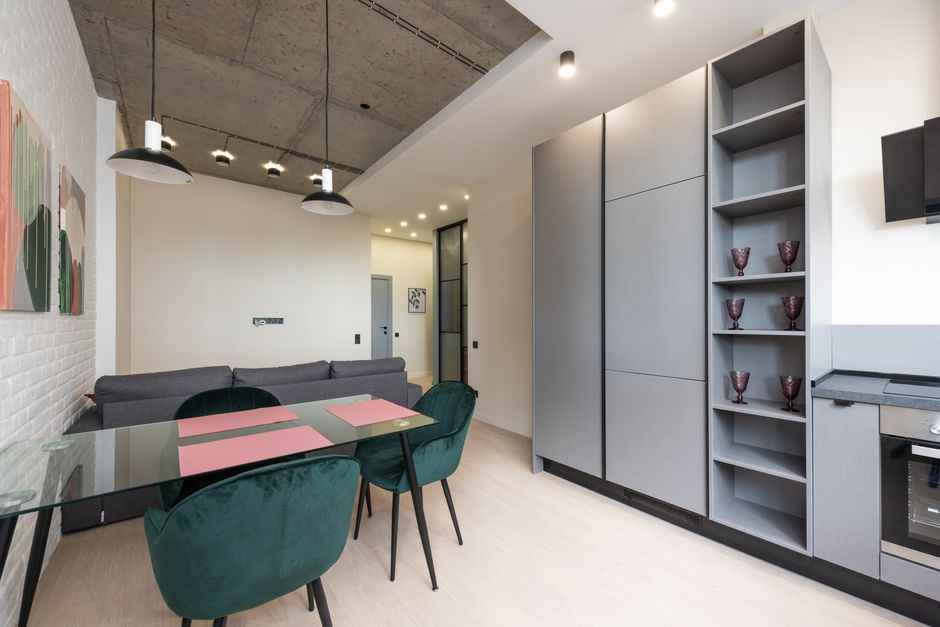
How much of your kitchen wall is doing anything useful right now?
For most apartment kitchens, the honest answer is close to zero. Counters overflow, the junk drawer won’t close all the way, and the cabinet above the fridge is a graveyard for appliances no one touches. Meanwhile, there’s a solid stretch of vertical space between the countertop and the ceiling that’s just holding air.
Vertical storage isn’t a design trend. It’s the only practical fix when the floor plan won’t expand.
The Three Vertical Zones Your Kitchen Is Ignoring
Before spending a dollar on anything, identify where the unused space actually sits. Every small kitchen has at least three zones that typically go to waste entirely.
The backsplash wall: counter to upper cabinet base
This strip — usually 18 to 24 inches tall — runs along every counter. Most people leave it blank or hang a single calendar. It can hold an entire spice collection, a magnetic knife strip, or a full rail system with utensil hooks. The IKEA SKÅDIS pegboard (76×56cm, $29.99) fits this zone well without eating into your counter depth. It mounts flush to the wall with included hardware and handles 22 lbs total.
A magnetic knife strip like the Wüsthof 17-inch version ($44.95) frees up the counter space a full knife block was occupying — roughly 6×8 inches returned, plus one full drawer of clutter eliminated at the same time.
The gap above upper cabinets
Standard 8-foot ceilings leave 12 to 18 inches between the top of the upper cabinets and the ceiling. Almost everyone ignores this because it’s awkward to reach. But it’s ideal for low-frequency items: stand mixers used twice a year, oversized stock pots, bulk paper towels. Flat-bottomed baskets or lidded bins keep things contained up there without looking like a storage disaster.
Most upper cabinets are 12 inches deep. If your ceiling gap is 14 inches tall, you can place a full additional layer of storage on top — that’s another 12×24-inch shelf equivalent, at zero cost and without mounting a single bracket.
The inside of cabinet doors
Most cabinet doors are completely blank on the interior. That’s 12 to 18 inches of usable surface per door. Over-door organizers from mDesign and SimpleHouseware typically hold 6 to 10 lbs, require no tools, and cost $15 to $22. A two-pocket door organizer handles spice jars, aluminum foil, or cleaning supplies — pulling them out of the drawer entirely.
For genuinely out-of-reach upper cabinets, the Rev-A-Shelf 4WDCO series of pull-down shelf organizers mounts inside 15 to 18-inch wide cabinets with four screws, bringing the back of the shelf to eye level. Worth the $80–$120 price if you’re regularly climbing a step stool just to find the cumin.
Vertical Storage Options Compared
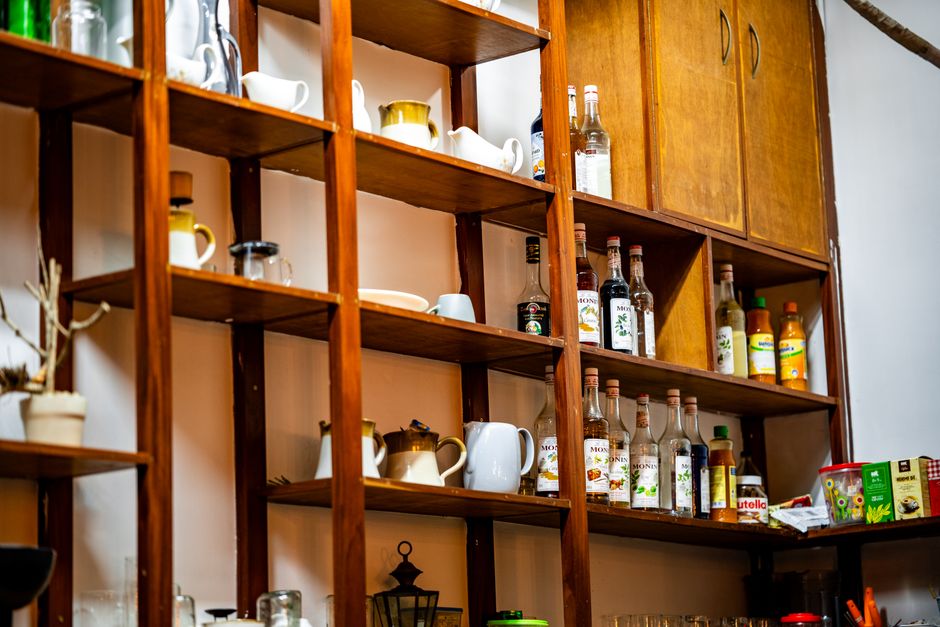
Not every solution suits every kitchen or rental situation. Here’s a direct comparison of the most practical options:
| Solution | Best For | Weight Limit | Approx. Cost | Renter-Safe? |
|---|---|---|---|---|
| IKEA SKÅDIS Pegboard (76×56cm) | Utensils, hooks, small tools | 22 lbs | $29.99 | Requires 4 wall anchors |
| Wüsthof Magnetic Knife Strip (17″) | Knives, scissors, metal tools | ~10 lbs | $44.95 | 2 screws or adhesive |
| mDesign Over-Door Organizer | Spices, wraps, small items | 6–10 lbs | $15–$22 | Yes — no tools needed |
| IKEA LACK Floating Shelf (110cm) | Plates, bowls, lighter pantry items | 22 lbs | $14.99 | Requires wall anchors |
| Elfa Wall System (The Container Store) | Full-wall modular shelving | Up to 200 lbs | $80–$300+ | Requires wall mounting |
| Rev-A-Shelf 4WDCO Pull-Down Shelf | Upper cabinet accessibility | 25 lbs | $80–$120 | Requires 4 screws |
For strict no-holes rentals, the mDesign over-door organizer is the safest starting point. For anyone who can patch small screw holes at move-out — which most leases allow — the IKEA SKÅDIS opens up significantly more usable capacity at under $30.
How to Add Storage Without Touching the Walls
These five approaches get most of the vertical storage benefit without any permanent wall modifications:
- Use tension rods vertically inside base cabinets. Most people only know tension rods as curtain hardware. Placed vertically inside a deep base cabinet, they create dividers that keep baking sheets, cutting boards, and pan lids standing upright instead of stacked. No tools, no damage, about $6 to $10 at any hardware store.
- Sort before buying anything. Pull everything out of one cabinet and divide it into daily-use versus twice-a-year-use. The twice-a-year items go high. Daily items stay at eye level or in door pockets. Buying storage before doing this step almost guarantees buying the wrong size or wrong type.
- Test adhesive mounting strips on your specific wall surface. Adhesive strips hold well on smooth painted drywall and fail on textured walls, wallpaper, and certain tile finishes. Test one strip with half the rated load and wait 72 hours before hanging anything heavy or breakable. Most large picture-hanging adhesive strips are rated around 16 lbs per pair — enough for a small shelf of spice jars, not enough for a cast iron skillet.
- Use the top of the refrigerator deliberately. Not a wall, but genuine vertical real estate. A flat-bottomed wicker basket or a two-tier wire organizer tray up there holds cookbooks, wine bottles, or pantry overflow without mounting a single thing to the wall.
- Measure cabinet interior depth before ordering door organizers. Standard upper cabinets are 12 inches deep. Base cabinets are 24 inches. Most over-door organizers are designed for upper cabinet doors — if you hang one inside a base cabinet door, it will collide with the interior shelf. Measure the clearance first.
The One Mistake That Undoes All of It
Overloading. A drywall anchor rated at 50 lbs does not safely hold 50 lbs of glass jars and ceramic bowls in a real kitchen environment. Vibration from appliances, humidity cycling, and the repeated impact of nearby cabinet doors all degrade the connection over time. The practical working rule: treat rated capacity as twice the safe load. A 50 lb anchor holds 25 lbs reliably. A 16 lb adhesive strip holds 8 lbs.
That’s why fully stocked kitchen shelves end up on the floor at 2 a.m.
Which Vertical Setup Works Best by Kitchen Shape
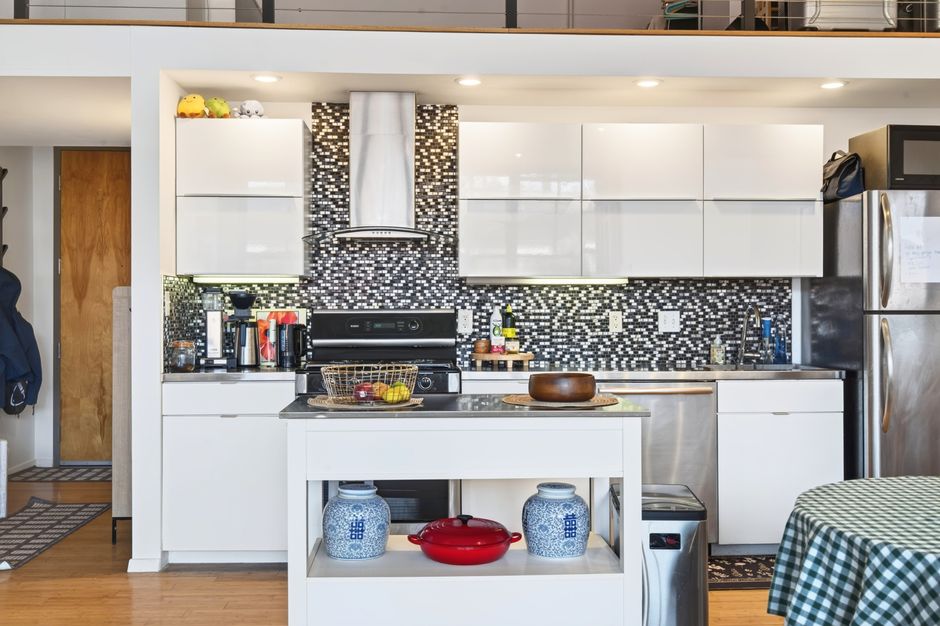
Galley kitchens — the narrow two-wall layout common in urban apartments — respond best to a continuous horizontal rail running the full length of one wall. The IKEA KUNGSFORS rail system ($15–$40 depending on length) uses S-hooks, shelf brackets, and hanging containers that all slide to any position. Nothing is permanently fixed. This matters when you’re working in 36 total inches of linear counter space and the layout of what you need keeps changing.
L-shaped kitchens waste the wall above the inside corner cabinet. That stretch of wall — right at the visual center of the kitchen — is actually the best pegboard location in the room. It’s not blocking any traffic path, it’s visible from both sides of the L, and it handles the utensils and small tools that would otherwise migrate back to the counter.
Studio apartment kitchenettes — typically a 4-foot run of appliances with no upper cabinets at all — need a different approach entirely. A freestanding shelving unit placed beside the kitchenette replaces the missing cabinet wall. The IKEA KALLAX (77×147cm, $139) works well here. Add fabric-lined baskets to the open cubbies and it handles dry goods, small appliances, and pantry items without a single wall anchor.
The IKEA RÅSKOG rolling cart ($34.99) earns a separate mention for kitchenettes specifically. Three tiers, fully mobile, fits in gaps that no fixed shelf could occupy. Parked beside a kitchenette and stocked properly, it outperforms most wall-mounted solutions at a fraction of the price — and it moves when you need the floor space back.